


Ecoremedy receives EPA approval for wastewater treatment technology
Ecoremedy LLC, which designs complete biosolid drying and gasification facilities for wastewater treatment, has received a ruling from the U.S. Environmental Protection Agency (EPA) that its fluid lift gasification technology is not an incineration.
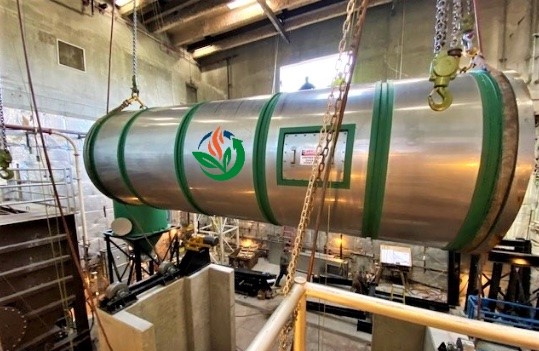
“After two years of intense scientific scrutiny, EPA’s determination empowers communities to deploy Ecoremedy to treat their waste locally in an environmentally friendly manner,” David Mooney, Ecoremedy president and chief technology officer, said. “The self-sustaining process eliminates dependence on fossil fuel to power the process and avoids the practice of hauling sludge across state lines to incinerators or landfills.”
The ruling confirms several health aspects of the technology: incineration commonly produces highly toxic and carcinogenic dioxins and furans. These pollutants cause reproductive and developmental problems, damage the immune system, and interfere with hormones.
Ecoremedy is working with Ameresco to install the fluid lift system at the City of Edmonds 31-year-old wastewater treatment plant in Washington state to replace an outdated, expensive, and unreliable incinerator that no longer meets the city’s environmental standards.
The new fluid lift system is expected to reduce CO2 emissions, reduce the plant’s electrical consumption, eliminate the need for fossil fuel necessary for the old incineration process and convert residual solids into a marketable product.
Completion is anticipated in late 2022. The Edmond facility was cited by the Water Environment Federation as a “Utility of the Future Today.”
The self-sustaining gasification process eliminates dependence on fossil fuel to power the process and avoids the practice of hauling sludge across state lines to incinerators or landfills and destructs polyfluoroalkyl substances (PFAS), known as the forever chemical.
With its ability to make FlexChar, a unique product that ranges from 1% carbon to over 60% carbon, the Ecoremedy system can be adjusted to increase the recovery of carbon for use as biochar. Or, the system can be tuned to increase energy recovery for use as a renewable energy source.
The EPA made its determination following Ecoremedy’s successful pilot project in Morrisville, Pennsylvania.
Related News
From Archive

- Oil pipeline struck during fiber optic construction spills into L.A. storm drains
- Utility strike at center of Dallas explosion investigation
- Gas line strike destroys three homes in Ohio neighborhood
- $1 billion Ohio River Tunnel project awarded in Pittsburgh
- Las Vegas advances multibillion-dollar water pipeline expansion
- When and why manhole rehabilitation is critical to sewer system performance
- Inside Infrastructure: Utility locators warn of systemic failures in damage prevention process
- Senate passes PIPELINE Safety Act aimed at strengthening buried utility protection
- $104 million Lynchburg, Va., tunnel nears breakthrough beneath Blackwater Creek
Comments