


Seattle to replace 21-million-gallon Bitter Lake reservoir with buried system
(UI) — Seattle Public Utilities (SPU) is replacing the 21-million-gallon Bitter Lake reservoir with a partially buried structure designed to improve long-term water quality and reliability.
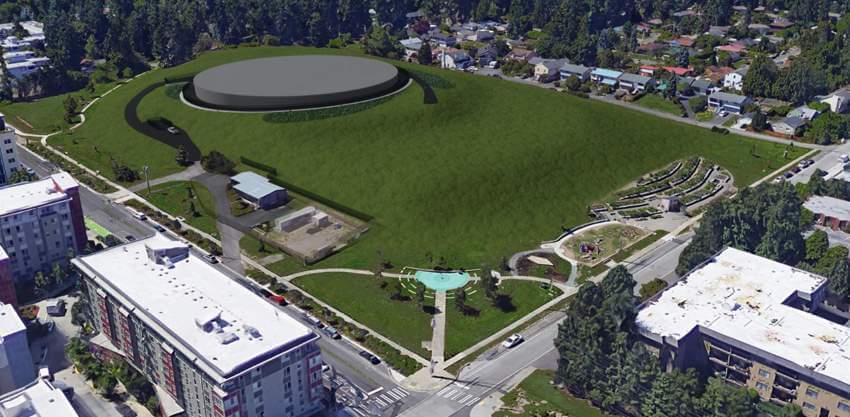
The new facility will maintain the same storage capacity as the current open-air reservoir but provide greater protection from sunlight, dirt, and debris. By enclosing the system, SPU says the project will help preserve drinking water service for years to come.
The 13-acre site sits near Linden Avenue North and North 143rd Street. Design work is underway, with the project expected to reach the 90% completion milestone in fall 2024. Construction will follow, and SPU anticipates completing the project in spring 2026.
Much of the new underground distribution lines will be installed using horizontal directional drilling (HDD) to minimize disruption in areas outside of the roadway. Trenching will be used in street sections where crews need to locate or avoid existing utilities.
The project is part of SPU’s regional drinking water system and is intended to modernize aging infrastructure while reducing risks associated with exposed reservoirs.
Related News
From Archive

- Oil pipeline struck during fiber optic construction spills into L.A. storm drains
- Utility strike at center of Dallas explosion investigation
- Gas line strike destroys three homes in Ohio neighborhood
- $1 billion Ohio River Tunnel project awarded in Pittsburgh
- Las Vegas advances multibillion-dollar water pipeline expansion
Comments