


December 2025 Vol. 80 No. 12
Features
Hydro excavation enables safe digging in tight urban spaces
(UI) — Not every dig site is wide open. In fact, many of today’s utility, infrastructure and municipal projects are happening in tight, crowded urban environments: alleys, narrow easements and locations where even maneuvering a truck can be a challenge. In these situations, the ability to hydro-excavate from a distance is more than a convenience – it’s often the only way to get the job done.
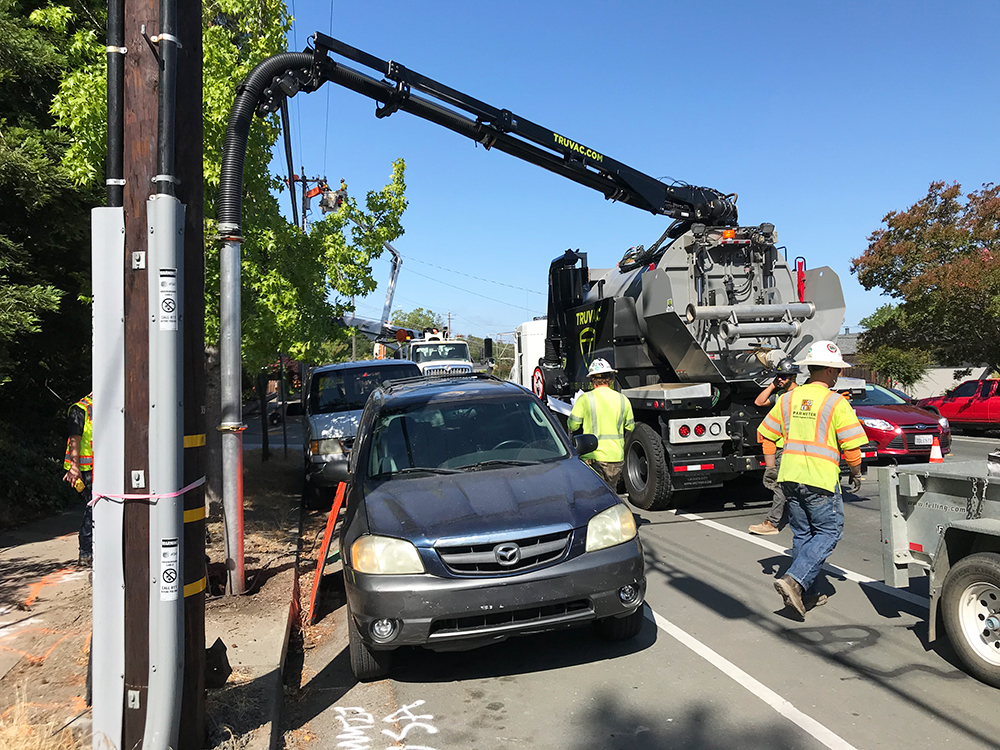
Here’s how equipment is engineered to support long-distance excavation safely, efficiently and effectively.
Boom reach matters – When the job site is blocked by obstacles like fences, walls, parked vehicles or buildings, you need a boom that can extend and maneuver with precision. Whether reaching over a barrier or down into a vault, manufacturers like TRUVAC offer powerful, multidirectional booms designed for complex access needs.
“In tight urban spaces, reach and boom control can make or break a job,” said Jason Boer, Midwest regional sales manager, TRUVAC. “You need to be able to stay parked and still get the work done without compromising safety or performance.”
Big debris bodies keep crews working – Working from a distance often means longer setup times and more complex access. The last thing a crew wants to do is stop mid-project to dump debris. That’s where a larger debris tank becomes essential.
“When you’re in an alley or behind a structure, moving in and out just to empty the tank isn’t practical,” Boer explained. “Larger capacity lets you dig longer without leaving the site. It’s a huge time and cost saver.”
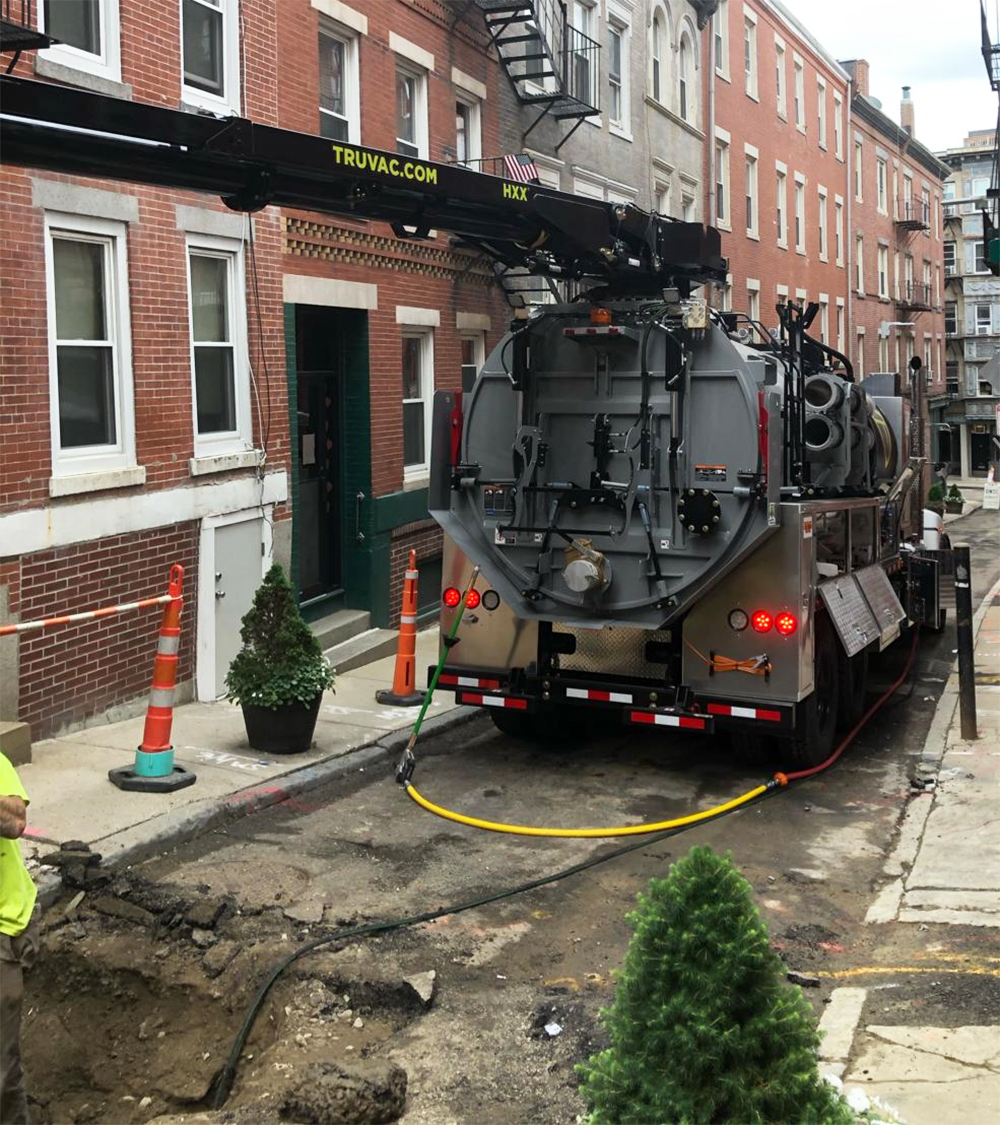
Air conveyance and power are critical – When digging from afar, high airflow is critical as it is what determines how fast the material moves. The vacuum system’s power aids in pulling the heavy stuff through the hose, so together airflow and power help suction heavy, wet and sticky materials efficiently.
The ability to cut through tough soil and vacuum debris without moving the truck not only speeds up excavation but also keeps workers out of risky positions and minimizes surface disruption.
Precision with modern technology – Controlling water pressure is at the heart of safe and efficient hydro excavation, especially in dense utility corridors. That’s why some TRUVAC units feature DigRight Technology, a patented system that lets operators set the correct water pressure for each task and ensures that it never exceeds that setting.
“When you’re excavating near gas, electric or fiber lines, water pressure control is absolutely critical,” said Andy Hearrell, Southeast regional dealer manager. “DigRight makes it simple to stay within job-site requirements, avoid utility damage and protect both the infrastructure and your crew.”
Safer work, smaller footprint – Long-distance excavation isn’t just about reach, it’s about keeping crews safe and reducing disruption. With hydro excavation, workers can operate the system from a safe distance, avoiding exposure to cave-ins, debris and utilities. Combined with the reduced footprint of a parked hydrovac truck, it’s a safer, smarter alternative to traditional methods like backhoes or manual digging.
And in areas where space is at a premium, hydro excavation often provides the only workable solution.
“Whether you’re exposing a water main in an alley or trenching along a crowded sidewalk, the ability to dig safely from 30, 40 or even 50 feet away is a game-changer,” said Boer.
FOR MORE INFORMATION:
TRUVAC, Truvac.com.

Comments