


Tunnel Boring Machine Breaks Through Planned Station in Los Angeles
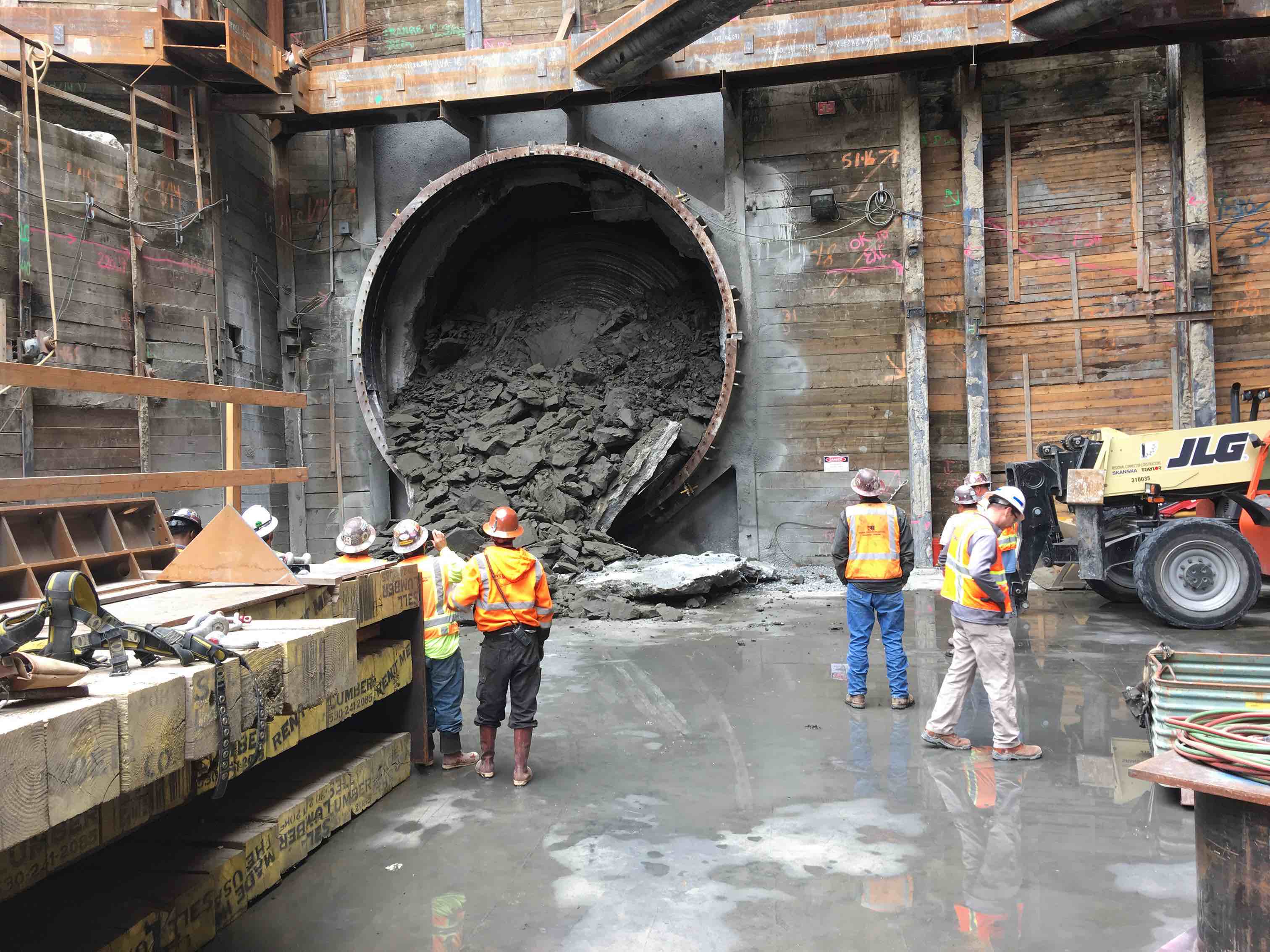
The $1.55 Billion Metro Regional Connector Transit Project, a 1.9-mile long subterranean twin rail tunnel linking Los Angeles’ Gold, Blue and Expo lines, today punched through the site of the future 2nd/Hope Station in Bunker Hill.
The tunnels, scheduled to wrap up by early 2018, will connect three new stations along the Connector’s expanded path, from Little Tokyo to the Financial District in downtown Los Angeles., including the 1st /Central Station in Little Tokyo and the 2nd /Broadway Station in the Civic Center. Arcadis is contracted to provide Construction Management Support Services for the project.
A 1,000-ton, 450-foot long tunnel boring machine christened “Angeli,” simultaneously digs, builds circular concrete to shape the tunnels and lays train tracks at a rate of 50-feet per day while excavating 1,300-tons of soil. Angeli started her journey in March to dig the first tunnel starting from 1st and Alameda in Little Tokyo to 4th and Flower in the Financial District.
The route enhancements, scheduled for completion in 2021, will allow for single-seat rides between Santa Monica and East L.A. and between Azusa and Long Beach, eliminating the need for riders to transfer between trains.
Related News
From Archive

- Oil pipeline struck during fiber optic construction spills into L.A. storm drains
- Utility strike at center of Dallas explosion investigation
- Gas line strike destroys three homes in Ohio neighborhood
- $1 billion Ohio River Tunnel project awarded in Pittsburgh
- Las Vegas advances multibillion-dollar water pipeline expansion
Comments