


EPA investigates Alabama’s sewage funds for discrimination against black residents
MONTGOMERY, Ala. (AP) — The U.S. Environmental Protection Agency announced Tuesday it has opened a civil rights investigation into whether Alabama discriminated against Black residents when handing out funding for wastewater infrastructure.
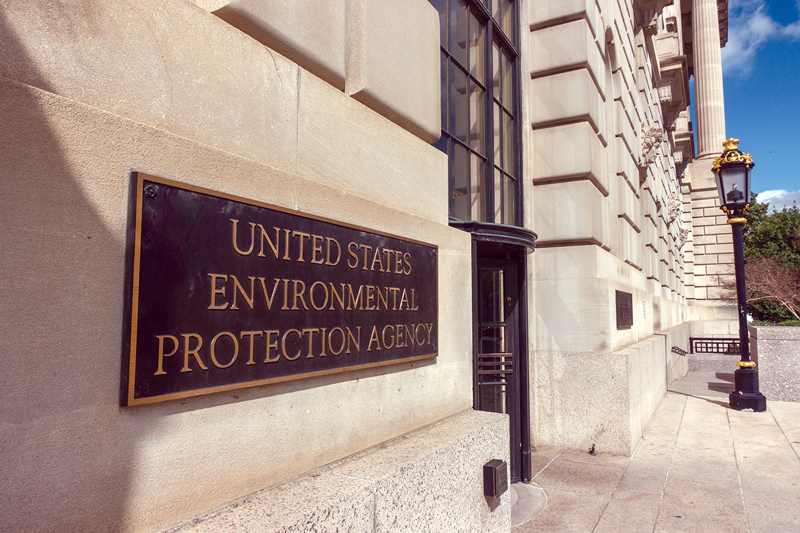
The Natural Resources Defense Council and the Center for Rural Enterprise and Environmental Justice filed the complaint this spring, arguing Alabama’s policies for distributing money have made it difficult for people — particularly Black residents in the state’s poverty-stricken Black Belt — to get help for onsite sanitation needs.
“Sanitation is a basic human right that every person in this country, and in the state of Alabama, should have equal access to. Those without proper sanitation access are exposed to illness and serious harm,” Catherine Coleman Flowers, founder of The Center for Rural Enterprise and Environmental Justice, said in a statement.
She said she hopes the federal investigation will “result in positive change for any Alabama resident currently relying on a failing onsite sanitation system and for all U.S. communities for whom justice is long overdue.”
The EPA wrote in a Tuesday letter to the Alabama Department of Environmental Management that it will investigate the complaint, specifically looking at implementation of the Clean Water State Revolving Fund and whether practices exclude or discriminate against “residents in the Black Belt region of Alabama, on the basis of race.” It will also look at whether ADEM provides prompt and fair resolution of discrimination complaints, the EPA wrote.
The ADEM disputed the accusations.
“As we stated earlier this year when the complaint was filed, ADEM disagrees with the allegations contained in it. In fact, ADEM has made addressing the wastewater and drinking water needs of disadvantaged communities a priority in the awarding of funding made available,” the agency wrote in a statement issued Wednesday.
The agency said it welcomes the opportunity to provide information to the EPA to counter the allegations. ADEM said state officials have made a priority in helping the region. The agency said in 2022, 34% ($157 million) of the $463 million of drinking water and wastewater funding awarded by ADEM went to Black Belt counties.
National environmental and social justice activists have long tried to put a spotlight on sanitation problems in Alabama’s Black Belt region, where intense poverty and inadequate municipal infrastructure have left some residents dealing with raw sewage in their yards from absent, broken or poorly functioning septic systems.
Alabama’s Black Belt region gets its name for the dark rich soil that once gave rise to cotton plantations, but the type of soil also makes it difficult for traditional septic tanks, in which wastewater filters through the ground, to function properly. Some homes in the rural counties still have “straight pipe” systems, letting sewage run untreated from home to yard.
The complaint maintains that Alabama’s policies for distributing money from the Clean Water State Revolving Fund, a federal-state partnership that provides communities low-cost financing for infrastructure, make it impossible for people who need help with onsite wastewater systems to benefit.
Federal and state officials have vowed in recent years to address sanitation problems through money in the American Rescue Plan — a portion of which state officials steered to high-need water and sewer projects — and the Bipartisan Infrastructure Act.
The U.S. Department of Justice this year announced a settlement agreement with the Alabama Department of Public Health regarding longstanding wastewater sanitation problems in Lowndes County, a high-poverty county between Selma and Montgomery.
Federal officials did not accuse the state of breaking the law but said they were concerned about a a pattern of inaction and neglect regarding the risks of raw sewage for residents. The agreement is the result of the department’s first environmental justice investigation under Title VI of the Civil Rights Act of 1964.
Related News
From Archive

- EIA: Texas to lead U.S. pipeline construction activity through 2027
- Oil pipeline struck during fiber optic construction spills into L.A. storm drains
- Utility strike at center of Dallas explosion investigation
- Gas line strike destroys three homes in Ohio neighborhood
- $1 billion Ohio River Tunnel project awarded in Pittsburgh
Comments