


Curved tunnel solves San Antonio sewer project's toughest challenge
(UI) — The American Society of Civil Engineers (ASCE) recently highlighted the engineering strategies behind the San Antonio Water System's W9 Upper Leon Creek Sewer Capacity Storage and Relief Project, where trenchless construction, geotechnical investigations and stakeholder coordination helped crews install a major sewer upgrade through an environmentally sensitive corridor.
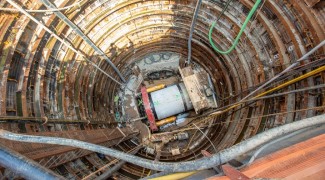
Designed to increase wastewater capacity, replace aging infrastructure and reduce sanitary sewer overflows, the project includes installation of 22,000 linear feet of new sewer pipeline, including a 48-inch fiberglass-reinforced polymer mortar pipe. Nearly half of the alignment is being installed through 78-inch-diameter tunnel segments beneath Upper Leon Creek on the city's west side.
Aging infrastructure drives project
The existing sewer system, built more than 55 years ago, consists primarily of 30-inch and 36-inch concrete pipe that no longer provides adequate capacity for the growing service area.
Replacing the line required navigating the 100-year floodplain while minimizing impacts to parkland, trails, mature trees and environmentally sensitive features.
Karst geology complicates construction
One of the project's biggest challenges involved crossing formations within the Austin Chalk Aquifer, where groundwater has created underground voids known as karsts.
Because these features can provide habitat for protected invertebrate species, the design team completed extensive geotechnical investigations and environmental reviews before construction began.
To reduce construction risk, engineers prohibited certain tunnel boring equipment in portions of the alignment where encountering large karst voids could create instability or trap machinery. At the time the article was written, no significant karst features had been encountered during construction.
Trenchless construction minimizes impacts
Although engineers initially evaluated open-cut construction, they determined excavations exceeding 30 feet deep would increase construction risks, dewatering requirements and impacts within the floodplain.
Instead, much of the project is being installed using trenchless methods.
One of the most technically challenging elements is an approximately 1,000-foot curved tunnel built on an 800-foot horizontal radius, allowing the alignment to avoid existing utilities, mature trees, park trails and environmentally sensitive areas while maintaining the required hydraulic grade.
The contractor selected hand-mining with 78-inch liner plate support, while the carrier pipe is installed in 10-foot sections through the completed tunnel.
Custom specifications reduce risk
Because more than 40% of the pipeline is being installed using trenchless methods, the design team developed project-specific specifications addressing:
- shaft construction
- groundwater control
- tunneling methods
- settlement monitoring
- contact grouting
- carrier pipe installation
Rather than requiring a single tunnel diameter, engineers allowed contractors to choose tunnel diameters between 72 and 84 inches, giving bidders greater flexibility to use existing equipment while reducing project costs.
Maintaining public access
The project also required extensive coordination with San Antonio's Parks and Recreation Department because much of the alignment crosses park property.
To maintain public access during construction, the project team installed temporary trail bypasses, erected construction fencing and held public meetings before work began.
The collaborative planning process allowed the sewer project to move forward while minimizing impacts to park users and environmentally sensitive areas.
Project demonstrates trenchless advantages
Project engineers said the combination of detailed geotechnical investigations, customized specifications and early stakeholder engagement helped balance infrastructure improvements with environmental protection.
The project demonstrates how trenchless construction can reduce surface disturbance while allowing large-diameter sewer infrastructure to be installed through complex urban environments.
Related News
From Archive

- Oil pipeline struck during fiber optic construction spills into L.A. storm drains
- Utility strike at center of Dallas explosion investigation
- Gas line strike destroys three homes in Ohio neighborhood
- $1 billion Ohio River Tunnel project awarded in Pittsburgh
- Las Vegas advances multibillion-dollar water pipeline expansion
Comments