


Las Vegas advances multibillion-dollar water pipeline expansion
(UI) — Southern Nevada is moving ahead with a massive regional water infrastructure expansion designed to improve system reliability and reduce the risk of service disruptions across the Las Vegas valley, according to reporting from 8 News Now.
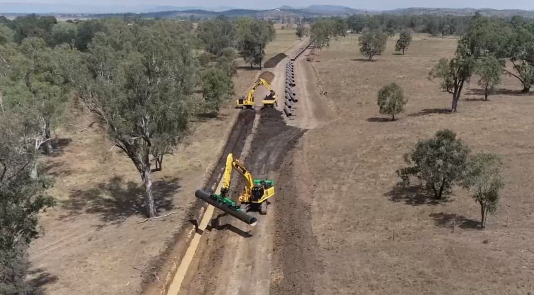
The Southern Nevada Water Authority’s Horizon Lateral Program includes construction of new large-diameter transmission pipelines, pumping stations, reservoirs and pressure-regulating infrastructure intended to strengthen redundancy throughout the region’s water delivery network. Project costs are currently estimated between $2 billion and $2.7 billion.
Officials said the investment is intended to address vulnerabilities within portions of the valley’s aging water system, particularly in fast-growing areas such as Henderson. Roughly 40% of Southern Nevada’s drinking water currently moves through the South Valley Lateral system, which serves close to 1 million customers. The new infrastructure is designed to provide backup delivery capacity during outages, maintenance events or emergencies.
The project has been under development for years, but recently advanced following federal approval tied to rights-of-way beneath portions of the Sloan Canyon National Conservation Area. According to 8 News Now, the legislation authorizing the project also expanded protected conservation land while allowing critical water infrastructure construction to proceed.
Planned improvements include a new transmission pipeline and pumping station serving southeastern Henderson, additional pressure-regulating valves, expanded storage capacity and new connections linking eastern and western portions of the regional distribution system. Water officials said the upgrades are intended to improve operational flexibility while supporting future population growth throughout Southern Nevada.
The Southern Nevada Water Authority said the project will be funded through regional development connection fees and water system infrastructure charges paid by local users. As reported by 8 News Now, officials emphasized the project does not increase Colorado River water allocations but instead focuses on improving reliability within the existing delivery network.
Related News
From Archive

- Oil pipeline struck during fiber optic construction spills into L.A. storm drains
- Utility strike at center of Dallas explosion investigation
- Gas line strike destroys three homes in Ohio neighborhood
- $1 billion Ohio River Tunnel project awarded in Pittsburgh
- Las Vegas advances multibillion-dollar water pipeline expansion
Comments