


China deploys AI-powered ‘smart brain’ system for tunnel boring machines
(UI) — Chinese researchers have developed an artificial intelligence–driven operating system for tunnel boring machines (TBMs) that allows equipment to sense ground conditions, predict hazards, and automatically adjust excavation settings in real time, as reported by Highways.Today. The system, described as a “smart brain,” was developed by researchers at Hunan University in collaboration with industry partners.
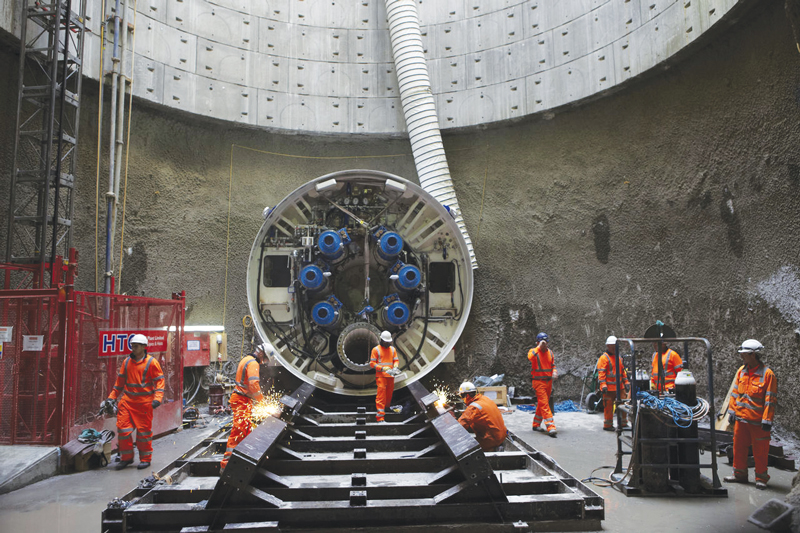
The technology represents a shift away from traditional TBM operation, which relies heavily on operator experience to interpret sensor data and respond to changing geology. Instead, the AI-enabled system processes multiple data streams simultaneously—such as torque, thrust, vibration, and penetration rates—to build a live picture of subsurface conditions ahead of the cutterhead.
Unlike conventional monitoring tools that flag issues after conditions change, the smart brain is designed to anticipate geological transitions before they become problematic. This predictive capability allows the TBM to modify cutting speed, thrust force, and pressure automatically as conditions evolve, reducing the risk of instability, water ingress, or equipment damage.
The system also enables continuous optimization of excavation parameters rather than relying on fixed settings based on pre-construction surveys. This adaptive approach is particularly relevant in complex or mixed ground conditions, where deviations from expected geology can lead to delays, safety incidents, or surface settlement.
According to Highways.Today, the intelligent TBM platform uses machine learning models trained on historical tunnelling data to correlate sensor patterns with specific geological conditions. As more data is collected during excavation, the system refines its predictions, effectively turning the TBM into a real-time geological assessment tool.
Industry observers say the technology could have broad implications for large-scale highway, rail, and utility tunnelling projects, where even minor disruptions can result in significant cost overruns. By reducing uncertainty underground, AI-enabled TBMs could improve schedule reliability and make long, high-risk tunnel projects more predictable for owners and investors.
The smart brain initiative also aligns with China’s broader push toward automated and intelligent construction technologies. In recent years, the country has increased investment in digital design, smart equipment, and AI-driven construction processes, targeting productivity gains and improved safety outcomes across major infrastructure programs.
While the system was developed in China, its potential applications extend globally. Tunnel boring machines are widely used in urban transit, highway, and utility projects worldwide, and intelligent operating systems could influence future standards for underground construction, particularly in dense cities and geologically challenging regions.
Related News
From Archive

- Oil pipeline struck during fiber optic construction spills into L.A. storm drains
- Utility strike at center of Dallas explosion investigation
- Gas line strike destroys three homes in Ohio neighborhood
- $1 billion Ohio River Tunnel project awarded in Pittsburgh
- Las Vegas advances multibillion-dollar water pipeline expansion
Comments