


LA recovery reports call for $650 million power line burial, major utility upgrades in Pacific Palisades
(UI) — Engineering assessments commissioned by the City of Los Angeles recommend burying hundreds of millions of dollars in electrical infrastructure and overhauling evacuation and utility systems in Pacific Palisades following the 2025 wildfire, as reported by Palisades News.
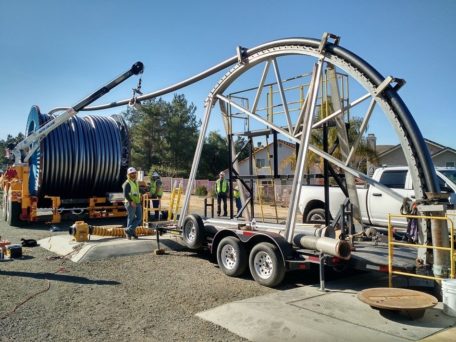
The reports, prepared by AECOM at a cost of $5 million, conclude that significant portions of the coastal community remain vulnerable to future disasters. Among the most costly recommendations is roughly $664 million to place electric distribution and transmission lines underground after nearly 57% of service points were destroyed during the fire.
In addition to electrical system burial, the documents outline nearly $1 billion in infrastructure investments through 2033. About $150 million is allocated to repair and replace aging water mains, addressing leaks and system weaknesses that became apparent during the wildfire.
According to Palisades News, the wildfire resilience report found widespread noncompliance with modern fire access standards. Many streets in areas such as the Alphabet Streets, Rustic Canyon and Castellammare do not meet current fire code width requirements. Numerous long dead-end roads also lack sufficient turnaround space for emergency apparatus, conditions the report states “directly impact the ability to fight fires and for civilians to safely evacuate.”
The studies also identified evacuation-related challenges, including what analysts described as “evacuation warning fatigue,” where repeated alerts led some residents to delay action during real emergencies. Traffic modeling showed several intersections could become chokepoints during a large-scale evacuation.
Water system failures during the 2025 fire further exposed infrastructure weaknesses. Storage tanks in hillside areas ran dry, and hydrants at higher elevations experienced pressure loss. The reports recommend installing larger-diameter pipelines, expanding water storage capacity, improving interconnections between systems and exploring alternative emergency supply sources such as recycled water, stormwater or seawater. Proposed upgrades also include real-time pressure monitoring and remote-operated valves to help maintain hydrant functionality during emergencies.
Vegetation management is another focus. The reports state that current defensible space policies are insufficient given the area’s steep terrain and heavy fuel loads. Recommendations include coordinated brush clearance with state and county agencies and creating vegetation buffers to improve firefighter access.
Recovery efforts are structured in phases. Immediate emergency stabilization work is largely complete, while restoration of essential services continues. Long-term infrastructure hardening projects — including utility burial and water system upgrades — are expected to extend over several years.
The logistics plan anticipates prolonged construction impacts, including heavy truck traffic, material staging challenges and congestion along key corridors such as Sunset Boulevard and Pacific Coast Highway. Coordinated construction scheduling and improved communication are recommended to minimize disruption as rebuilding proceeds.
Related News
From Archive

- Oil pipeline struck during fiber optic construction spills into L.A. storm drains
- Utility strike at center of Dallas explosion investigation
- Gas line strike destroys three homes in Ohio neighborhood
- $1 billion Ohio River Tunnel project awarded in Pittsburgh
- Las Vegas advances multibillion-dollar water pipeline expansion
Comments