


Amtrak advances construction on key D.C.–New Jersey rail tunnel replacement
(UI) — Amtrak’s long-planned effort to replace the aging Baltimore & Potomac (B&P) Tunnel is moving into a major construction phase, as key contracts have been awarded for the Frederick Douglass Tunnel and related corridor improvements along the Northeast Corridor (NEC).
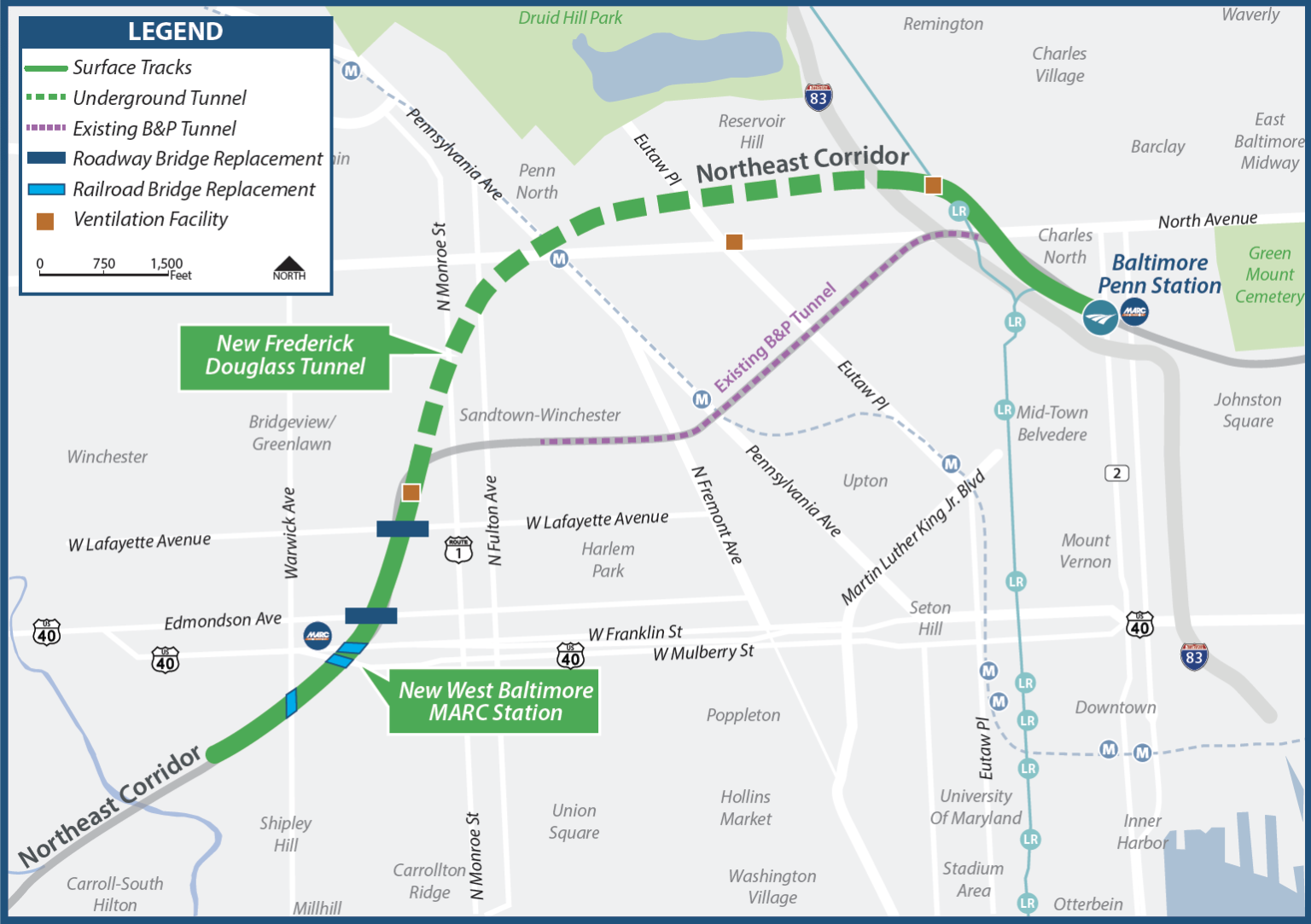
The existing 1.4-mile B&P Tunnel, which dates back more than 150 years to the Civil War era, is the oldest Amtrak tunnel in operation and one of the most significant bottlenecks between Washington, D.C., and New Jersey. The structure connects Baltimore’s Penn Station with Washington and Virginia and serves approximately 14 million MARC and Amtrak passengers annually.
Officials say the tunnel has reached the end of its useful life. The aging infrastructure faces ongoing water infiltration, structural deterioration and a sinking floor. The tight curvature of the tunnel limits train speeds to 30 mph, contributing to frequent delays. According to program information, more than 10% of weekday trains are delayed, and delays occur on nearly every weekday.
To address those issues, the B&P Tunnel Replacement Program will deliver a new two-mile Frederick Douglass Tunnel designed for electrified passenger trains. The twin-bore tunnel will support speeds up to 100 mph — more than three times the current limit — and incorporate modern fire and life safety systems.
The broader program will modernize approximately 10 miles of NEC infrastructure in the Baltimore area and includes construction of a new ADA-accessible West Baltimore MARC Station. Additional community improvements include roadway and bridge upgrades and a $50 million Community Investment Program.
Major contracts have been awarded for tunnel construction (Package A) and the Southern Approach (Package B). The prime contractors include Kiewit / J.F. Shea Joint Venture and Clark Construction / Stacy and Witbeck Joint Venture. The program is being delivered in partnership with the Federal Railroad Administration, Maryland Department of Transportation Maryland Transit Administration, the City of Baltimore and Amtrak.
Funding sources include discretionary grants under the Infrastructure Investment and Jobs Act (IIJA), along with support from MDOT/MTA and Amtrak.
The overall program is expected to be completed in 2035.
Related News
From Archive

- Oil pipeline struck during fiber optic construction spills into L.A. storm drains
- Utility strike at center of Dallas explosion investigation
- Gas line strike destroys three homes in Ohio neighborhood
- $1 billion Ohio River Tunnel project awarded in Pittsburgh
- Las Vegas advances multibillion-dollar water pipeline expansion
Comments