


Wisconsin judge upholds state permits for Enbridge’s 41-mile Line 5 relocation
By Mary Holcomb, Lead Digital Editor
(UI) — A Wisconsin administrative law judge has upheld key state permits for Enbridge Energy’s proposed 41.1-mile Line 5 relocation in northern Wisconsin, rejecting challenges to the Wisconsin Department of Natural Resources’ (DNR) wetland, waterway and water quality approvals.
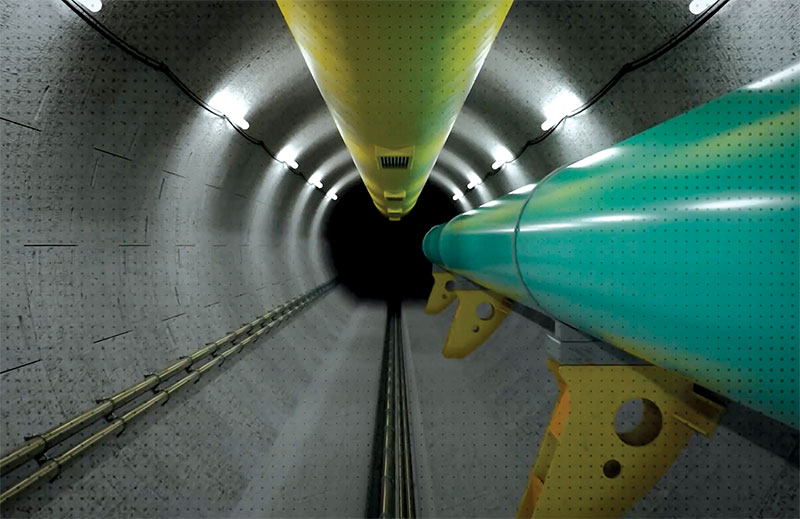
The ruling follows a contested case hearing before the Wisconsin Division of Hearings and Appeals involving permits issued for the Line 5 Wisconsin Segment Relocation Project in Ashland, Bayfield and Iron counties.
The project would reroute approximately 20 miles of existing 30-inch Line 5 pipeline that currently crosses the Bad River Reservation. A prior federal court ruling requires Enbridge to cease operation of that segment by mid-2026, prompting the relocation effort.
State permits upheld
The DNR issued Enbridge a combined individual Wetland and Waterway Permit, a Water Quality Certification and coverage under the WPDES Construction Site Stormwater General Permit. Those approvals were challenged by the Bad River Band of Lake Superior Chippewa and environmental groups.
After reviewing testimony, environmental analyses and permit conditions, the administrative law judge concluded the DNR’s approvals complied with statutory requirements and were supported by the administrative record.
Construction methods include:
- Open-cut trenching for most of the alignment
- Horizontal directional drilling (HDD) at select crossings
- Direct bore methods in certain areas
- Blasting where required to achieve burial depth
- Temporary clear span bridges at waterway crossings
The project includes construction of 41.1 miles of new 30-inch pipeline and installation of 10 new mainline block valves. Planned construction methods include open-cut trenching, horizontal directional drilling at select crossings, direct bore installations, controlled blasting to achieve burial depth and temporary bridge crossings over waterways.
The route traverses numerous wetlands and navigable waterways in the Bad River watershed and surrounding areas. The DNR imposed extensive environmental conditions, including erosion control, dewatering restrictions, invasive species management, restoration requirements and post-construction monitoring.
Enbridge response
Following the ruling, Enbridge issued a statement welcoming the decision:
“The Administrative Law Judge has confirmed what expert testimony in the case clearly established—the Wisconsin Department of Natural Resources made the right decision when it issued permits for the Line 5 Wisconsin Segment Relocation Project after an extensive and thorough four-plus-year review.
The DNR’s Environmental Impact Statement reached the correct conclusion that project construction impacts will be temporary and isolated, with no significant adverse effects to water quality or wetlands. State permits issued in 2024 include extensive environmental protections and restoration plans approved by regulators.
We anticipate the U.S. Army Corps of Engineers’ Proffered Permit will be signed and finalized in the coming days allowing construction to start. Our crews are preparing for construction and are ready to begin as soon as all approvals are received.
Enbridge submitted permit applications to state and federal regulators in early 2020 for the Line 5 Wisconsin Segment Relocation Project to build a new segment of pipeline around the Bad River Reservation. Line 5 is critical energy infrastructure serving 10 refineries and propane production facilities—providing raw materials to meet the everyday energy needs of millions of people in the Midwest and Great Lakes Region.”
If the U.S. Army Corps of Engineers issues its final permit, the relocation project could move into active construction later this year.
For underground infrastructure contractors and pipeline operators, the ruling removes a significant state-level regulatory barrier for one of the Midwest’s most closely watched energy infrastructure projects.
The broader legal and federal permitting process remains ongoing.
Related News
From Archive

- Oil pipeline struck during fiber optic construction spills into L.A. storm drains
- Utility strike at center of Dallas explosion investigation
- Gas line strike destroys three homes in Ohio neighborhood
- $1 billion Ohio River Tunnel project awarded in Pittsburgh
- Las Vegas advances multibillion-dollar water pipeline expansion
- When and why manhole rehabilitation is critical to sewer system performance
- Inside Infrastructure: Utility locators warn of systemic failures in damage prevention process
- Senate passes PIPELINE Safety Act aimed at strengthening buried utility protection
- $104 million Lynchburg, Va., tunnel nears breakthrough beneath Blackwater Creek
Comments