


December 2025 Vol. 80 No. 12
Features
AUI scales underground fiber builds with repeatable HDD workflow
By Amy Olsen
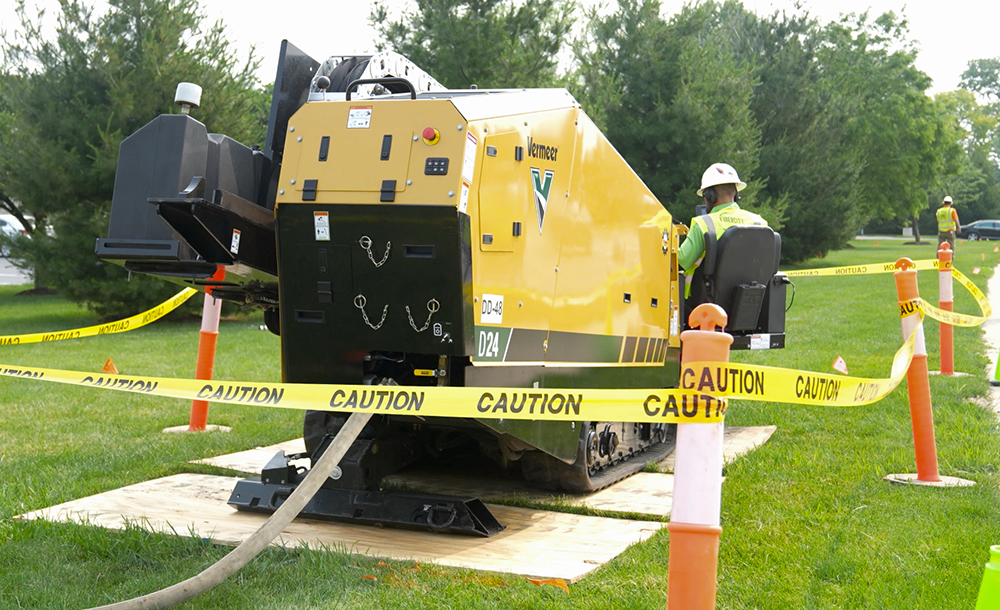
(UI) — On a November morning in Rockford, Ill., a Vermeer D24 horizontal directional drill (HDD) is positioned in the parkway along a quiet residential street. The crew from Always Underground Inc. (AUI) will drill 800 feet (244 meters) along the utility corridor by mid-afternoon, pull two-inch conduit through the bore and move to the next block before dark. Two streets over, vacuum excavator crews expose utilities ahead of the drill rigs. Behind them, crews set handholes, pipe teams install micro ducts through conduit and restoration crews cycle through as blocks open on the schedule.
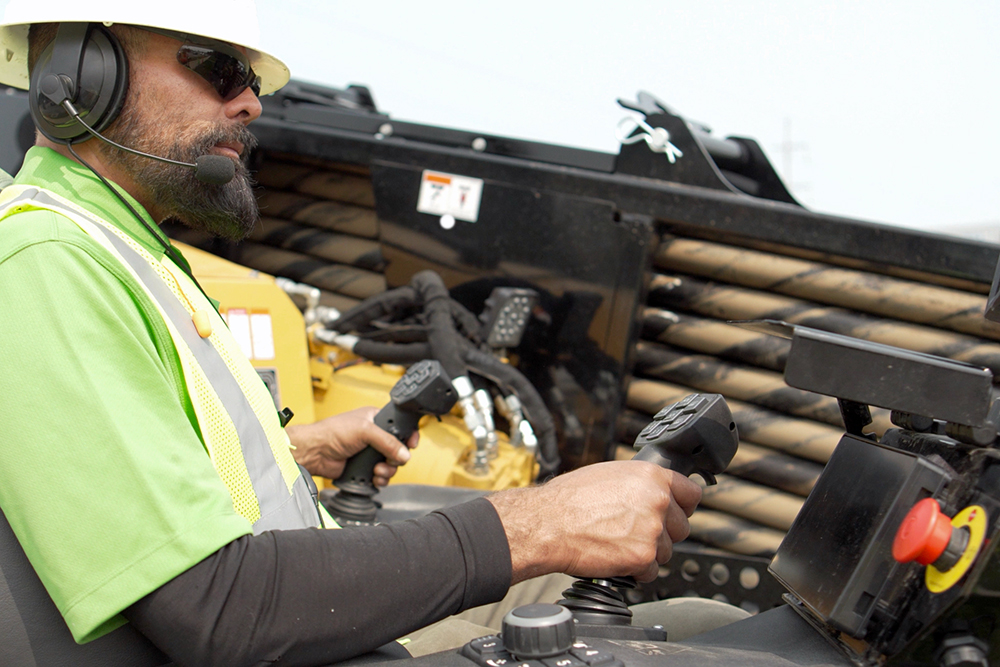
This is the Rockford FiberCity build, and it looks the same on 150 blocks across the city. AUI runs about 12 HDD crews on the project with another 40 support personnel cycling through vac work, handholes, pipe installation, fiber blowing, splicing and restoration. The sequence takes 65-to-75 days from first activity to service ready, depending on utility locates, weather and inspection schedules. When complete, SiFi Networks will have delivered fiber to more than 81,000 homes and businesses across 1,300 miles (2,092 km) of new underground plant.
The same progression is underway in Kenosha, Wisc., and the Farmington/Farmington Hills area of Michigan, where AUI multi-year fiber programs now stretch into the millions of installed feet of new fiber infrastructure. These builds rely on HDD, plowing and trenching crews working in sequence as blocks open on the schedule. To keep that sequence moving, AUI plans its equipment mix around the demands of each project.
One rig to multi-city contractor
David Paulin, vice president of AUI, started in underground construction in 1999 and worked his way through laborer, operator, locator and general foreman roles before launching the company in 2013. He founded AUI with one HDD rig and three employees, subcontracting fiber-to-the-home work for larger primes across Illinois and Indiana. Early on, most jobs were straightforward fiber runs for providers such as AT&T and Comcast, and AUI often worked as just one step in a long contractor chain.
Over time, that was not enough.
"We were subcontracting for different prime contractors," Paulin said. "I just got tired of someone else controlling our schedule."
The shift came in 2018 when AUI secured a prime contract with AT&T and later contributed to Verizon One Fiber construction. Those opportunities pushed the company to own more of the process, including planning, permits and restoration.
"We wanted to be a prime with these guys," Paulin said. "That is what I fought for, and that is where we are at today."
Today, AUI operates about 62 rigs and employs roughly 540 people across Illinois, Indiana, Wisconsin, Michigan, Iowa, Ohio, Kentucky and eastern Missouri. The company self-performs most of its work and maintains Gold Shovel Standard certification with an Experience Modification Rate (EMR) of 0.74, which is important on schedule-driven fiber jobs where safety performance and production both matter.
Across all markets, AUI installed roughly 7.2 million feet of underground construction in 2025. Paulin estimates that 80-to-85 percent of that work was HDD, with about 10 percent plow and the balance aerial.
Repeatable workflow
AUI FiberCity work is built around a precise sequence, not a rush to do everything on a block in one day. The company assigns dedicated crews to each phase of the work and lets the process carry them through the neighborhood. That sequence repeats across Rockford, Kenosha and the Farmington/Farmington Hills area. From the first activity on a block to the point where service is available, Paulin said the timeline generally falls between 65 and 75 days depending on inspections, weather and restoration.[repetitive?]
The same process applies to rural broadband builds. For Jo Carroll Energy in western Illinois, AUI is installing about 800 miles (1,287 km) of new fiber. Most of that work uses six Vermeer RTX1250 plows. "We currently have six plows running on that project, and we have completed about 250 to 260 miles so far," Paulin said.
AUI chooses installation methods based on each project's requirements and what will keep crews moving. On the Jo Carroll Energy build, the original plan called for direct burial, but AUI shifted to plowed interduct because frequent driveway crossings made direct burial inefficient.
In denser areas like Rockford and Kenosha, HDD carries most of the work because it fits tight residential corridors and keeps restoration predictable. Plowing remains the primary method on long rural runs, where uninterrupted footage is possible, and HDD supports the block-to-block work where accuracy and controlled surface impact matter most.
One variable that sits outside AUI’s direct control is utility locate timing. Paulin said locate delays are often the biggest constraint on production because drilling and vacuum excavation crews cannot advance until utilities are cleared. When tickets fall behind, the entire sequence slows, from bores to handholes to pipe installation. To limit that impact, AUI stages work across multiple neighborhoods so crews can shift as soon as clearances arrive and keep the underground construction process moving.
Matching fleets
AUI’s HDD fleet is set up to cover the range of work it encounters, from short residential laterals to long bundled duct crossings on broadband infrastructure projects. The company runs multiple models, including compact, mid-size and large HDD rigs, and assigns them based on shot length, product and ground conditions.
The smaller Vermeer D10x15 S3 HDD drills are ideal for short residential crossings, where crews need a compact footprint. "We use that drill when we are working in front yards and driveways," Paulin said. "It is easy to position and works well in those smaller work areas."
Vermeer D20x22 S3 HDD drills are everyday production tools for neighborhood mainline work, typically pulling 2- to 3-inch conduit along one side of the street. "On mainlines, crews are doing 800 to 1,000 feet a day with that drill," Paulin said. These rigs work in standard utility corridors where crews install new conduit among existing gas, electric and communications lines.
On projects that call for longer bores or larger duct bundles, crews move from compact drills to larger Vermeer HDD rigs, such as the D23x30 S3, D24, D24x40 S3 or D40x55 S3 HDDs. A Vermeer D100x140 S3 rig is typically assigned to bundled work and demanding crossings, including carrier jobs, where AUI pulls six to 12 lines of 4-inch conduit in a single shot. AUI also runs air hammers on its D100x140 S3 and D40x55 S3 drills so those rigs can stay productive when the work shifts into rock or harder formations.
Tooling on AUI fiber work is built around both the Vermeer Ultra X3 drilling system and Vermeer Armor tooling systems, which give operators flexibility as ground conditions change. These platforms let crews swap bits and reamers without having to rework the whole drill string setup. For most shots, drillers run a Vermeer Ace bit in softer soils, then follow with 6- to 8-inch reamers when they are pulling 2- to 3-inch conduit bundles.
Locating is standardized across the fleet using the DigiTrak Falcon F2+ system from Digital Control Incorporated (DCI).
"It is user-friendly, so everybody is pretty used to that around here," Paulin said. “And, keeping Falcon F2+ units consistent across crews helps maintain clean communication and bore control whether work is taking place in a subdivision, along a busy corridor or on a rural stretch.”
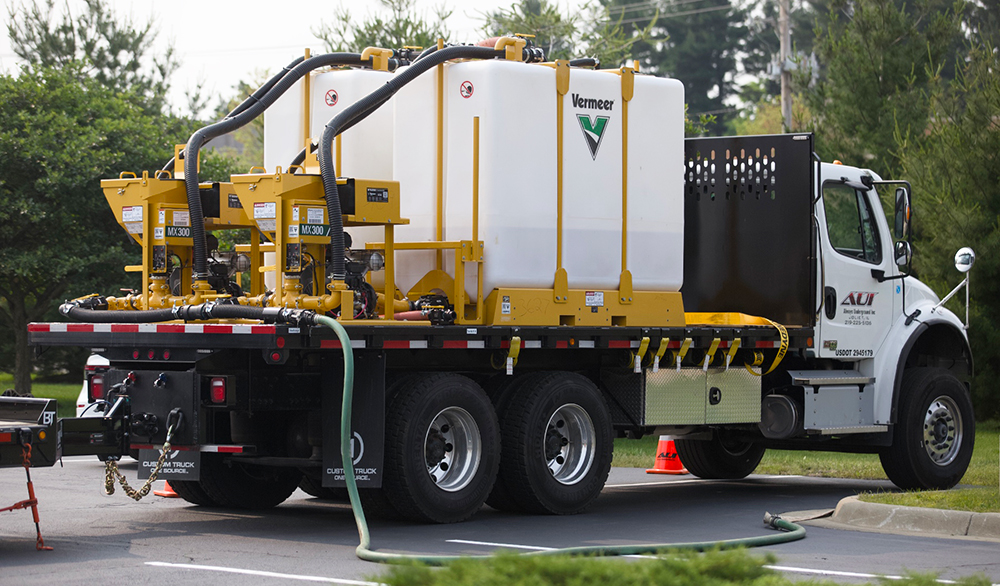
Vacuum excavation is built into the AUI block-to-block workflow. Crews use Vermeer trailer and truck vacuum excavators, including the VXT600, to uncover utilities ahead of HDD work and support fluid management.
The unit handles heavier utility exposure work on FiberCity projects in Rockford and Farmington, allowing drilling crews to stay focused on production as the job moves from one neighborhood to the next.
Tech training, production
Within an AUI drill spread, the Vermeer D24 HDD fills a defined role on the fiber construction side of the business. It is a single machine in a much larger lineup, but it has become a reliable option for mid-length production work and a platform AUI uses to bring new operators up to speed.
Paulin first saw the D24 HDD at a roadshow event in Indianapolis and said the team immediately noticed how the machine was laid out. "It stood out to us from the automatic rod exchange (ARE) system, the on-screen diagnostics and just the ease of running the machine," he said.
Those features aligned with the kind of work AUI does on FiberCity projects, where consistent rod handling and simple controls help keep the drilling sequence tight. The D24 ARE system has shown up most clearly in day-to-day usage.
The unit has also become part of the AUI internal training process. Automation allows experienced operators to demonstrate each phase of the drilling cycle, while new operators watch timing and sequence before taking the controls.
"You could teach operators every step of that machine before you let them actually do it hands-on because it has the functionality to do it itself," Paulin said. "It is great for training because you can run through the process the same way every time."
Noise levels around 88 dB(A) at the operator's ear help with communication in residential areas and commercial corridors where crews work close to homeowners and businesses. For Paulin, who began his career with older, louder HDD equipment, that is a meaningful improvement.
Running more than 60 HDD rigs, plows, trenchers, multiple vacuum excavators and support equipment across several states requires its own layer of planning. AUI manages day-to-day service needs through satellite yards.
“Every market that we go into, we set up a yard or a shop," Paulin said. "That yard or shop has its own PM, its own mechanics." Mechanics operate from service trucks, and the company uses fleet tracking to monitor where machines are, how many hours they have and when they are due for service.
For planned maintenance, AUI enrolls new drills in the Vermeer Confidence Plus program through Vermeer Midwest. The program packages primary service intervals into a predictable schedule and uses genuine parts and fluids installed by dealer technicians. The structure helps Paulin’s team plan downtime rather than react to it. Internal mechanics focus on the day-to-day work associated with fiber construction, while larger scheduled services are handled at the dealer.
Building the next fiber phase
AUI is carrying roughly $350 million in backlog across its city and rural broadband work over the next two years. Paulin expects that number to stay strong as more markets move from planning to construction. The company recently passed $100 million in annual revenue, a major milestone for the business.
Even as the numbers scale, the work on the ground still looks familiar. The same sequence of potholing, drilling, handholes, pipe, fiber blowing and splicing repeats from block to block, powered by crews that know their role and equipment that fits the job in front of them. HDD drills, vacuum excavators, tooling packages and the Confidence Plus program all support that system, but Paulin continues to bring it back to the basics.
"It is very much the same thing every day," he said. "Drilling, setting handholes, installing fiber and splicing it and handing it over to the customer.”
ABOUT THE AUTHOR: Amy Olson is the brand experience lead for Vermeer Corporation, Pella, Iowa.
FOR MORE INFORMATION:
Always Underground, (219) 225-5136, alwaysunderground.net
Vermeer Corporation, vermeer.com/na

Comments