


January 2026 Vol. 81 No. 1
Features
Underground cables market to hit $55.1 billion by 2033
(UI) — The global underground cables market, though rarely visible, forms the backbone of modern power transmission and communication networks.
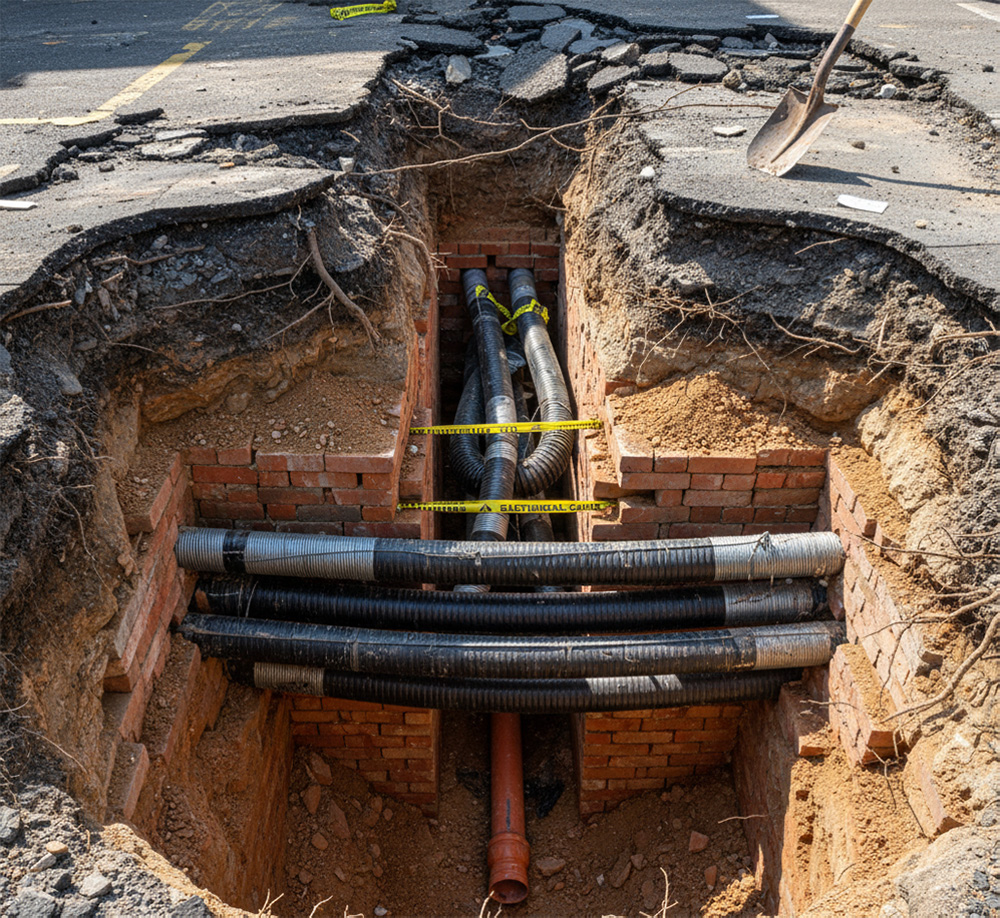
According to Research Intelo, this market was valued at approximately $32.5 billion in 2024 and is projected to grow steadily, reaching $55.1 billion by 2033, with a compound annual growth rate (CAGR) of 6.1 percent. This growth trajectory underscores the sector’s critical role in enabling safe, reliable and aesthetically efficient energy distribution systems across both established and emerging economies.
Urban environments are evolving at a pace unseen in previous decades. As cities expand vertically and horizontally, the demand for infrastructure that minimizes visual clutter and maximizes reliability continues to rise. Underground cabling provides a solution that satisfies both aesthetic and operational requirements.
Historically, overhead lines sufficed for energy distribution. However, frequent weather disruptions, rising population density and the increasing complexity of urban landscapes have made these systems less viable. Power interruptions due to storms, ice accumulation or falling trees remain significant issues. Underground cables mitigate these vulnerabilities, providing enhanced stability and resilience in power transmission.
According to the Research Intelo report, one of the primary drivers of this market’s growth is the growing need for uninterrupted energy supply in densely populated regions and industrial zones. The trend toward underground infrastructure also aligns with broader environmental and urban planning goals, creating a cleaner, safer, and more organized urban skyline.
Materials defining modern cabling
The materials used in cable manufacturing determine their performance, durability and suitability for specific environments. The current market is dominated by cross-linked polyethylene (XLPE) cables, which have become the preferred standard for high-capacity and high-voltage applications.
XLPE cables are prized for their superior thermal resistance, chemical stability and electrical conductivity. They support higher current loads and exhibit longer service life, making them ideal for both high-voltage (HV) and extra-high-voltage (EHV) transmission.
While polyvinyl chloride (PVC) remains prevalent, particularly in low and medium voltage applications, it is increasingly viewed as a transitional material due to its environmental footprint. PVC cables are more cost-effective and easier to install, making them suitable for residential and light commercial use. However, growing environmental regulations and the push for sustainable materials have accelerated the market shift toward XLPE alternatives.
Ethylene propylene rubber (EPR) represents a smaller, but important, segment of the market. EPR cables are primarily used in harsh industrial settings – such as oil refineries, mining sites, and chemical plants – where flexibility, heat tolerance and chemical resistance are essential. These materials collectively illustrate the adaptability of the industry to diverse technical and environmental demands.
Voltage spectrum
Electricity distribution networks can be conceptualized as a layered system, each voltage level serving a distinct purpose.
- Low-voltage cables function as the final delivery mechanism, carrying power within buildings or across short distances.
- Medium-voltage cables form the core of local distribution grids, channeling electricity from substations to commercial centers or residential neighborhoods. Their role is expanding rapidly as smart grid systems become integral to urban infrastructure.
- High-voltage cables act as the arteries of national power systems, transmitting large volumes of electricity from generation sites to major consumption centers with minimal energy loss.
- Extra-high-voltage (EHV) cables sit at the top of this hierarchy, serving as intercontinental or cross-border conduits that connect entire national grids. They facilitate efficient long-distance transmission and support the integration of remote renewable energy projects.
Each level contributes to the creation of a resilient and flexible power ecosystem capable of handling fluctuating demands and integrating new generation technologies.
Utility companies represent the largest customer segment in the underground cables market. These organizations are focused on modernizing outdated grid infrastructure, integrating renewable energy sources, and improving grid reliability. By transitioning from overhead to underground systems, utilities can safeguard networks against environmental damage and reduce maintenance costs over time.
The industrial sector also constitutes a significant share of demand. Industries such as oil and gas, mining and manufacturing require specialized cables capable of enduring extreme conditions, including mechanical stress, chemical exposure and temperature fluctuations. The growing adoption of automation and robotics further reinforces the need for stable and high-performance cabling systems.
The commercial and residential segment, though smaller in revenue, remains vital. Rapid construction in urban centers, coupled with stricter building codes emphasizing safety and energy efficiency, continues to drive demand. Retrofitting older structures with underground cabling systems is another contributing factor, particularly in developed markets.
Balancing cost, complexity
The method of cable installation is a major determinant of project cost and feasibility. Three primary techniques dominate current practice: direct burial, tunnel installation and duct systems.
Direct burial involves excavating trenches and laying cables directly into the ground. It is the simplest and most cost-effective approach, but requires durable cable sheathing to protect against soil movement, moisture and accidental excavation.
In contrast, tunnel installation is typically reserved for dense urban areas where space is limited and existing infrastructure complicates excavation. Cables are placed within purpose-built or shared utility tunnels that provide controlled environments and easy maintenance access. This method offers superior protection, but demands extensive civil engineering work and higher capital expenditure.
Duct systems provide an intermediate solution. They employ pre-installed conduits, often made from steel or PVC, through which cables can be pulled or replaced, as needed. This approach offers flexibility for future upgrades and is favored in commercial and industrial zones where operational continuity is essential.
As per Research Intelo analysis, regional disparities in growth reveal distinct market priorities. Asia Pacific currently holds the dominant position, accounting for approximately 38 percent of global market share in 2024, equivalent to around US $12.4 billion. The region’s projected growth rate of 7.2-percent CAGR outpaces that of any other region.
This dominance stems from rapid urbanization and large-scale infrastructure projects in countries such as China, India and South Korea. These nations are constructing new power networks from the ground up, often incorporating underground cabling as a foundational element rather than as a retrofit solution.
Meanwhile, North America and Europe remain key markets focused on modernization and replacement. Much of their infrastructure dates back decades, prompting large-scale efforts to upgrade aging cables, meet updated safety regulations and integrate renewable energy grids. Europe is prioritizing cross-border interconnections to strengthen regional energy security and improve the transmission of renewable power.
Emerging economies in the Middle East, Africa and Latin America are increasingly adopting underground systems as part of national electrification initiatives. Although these regions currently account for a smaller market share – collectively valued at around $6.5 billion – their long-term growth potential is substantial, as urbanization accelerates and policy support intensifies.
Market structure, competitors
The global underground cables market is defined by a concentration of technologically advanced manufacturers. Leading companies such as Prysmian Group, Nexans and Sumitomo Electric Industries dominate the competitive landscape. These firms focus on developing high-efficiency, environmentally responsible and longer-lasting cable systems that align with global energy transition goals.
Competition is primarily driven by innovation in materials, manufacturing processes and sustainability initiatives. The development of green insulation materials and recyclable cable components is gaining traction, reflecting the industry’s response to tightening environmental regulations.
Nonetheless, high installation costs continue to constrain faster market adoption. Underground cabling projects require specialized machinery, skilled labor, and complex permitting processes, particularly in urban environments. Locating and repairing faults in buried systems also adds to operational challenges, demanding sophisticated monitoring and diagnostic technologies.
The primary barrier to rapid market expansion remains high capital cost, particularly for EHV projects, which require specialized engineering and extended installation timelines. However, these challenges are counterbalanced by compelling long-term advantages. Underground systems significantly reduce maintenance expenses, enhance safety, and improve system reliability in adverse weather conditions.
The global shift toward renewable energy integration further strengthens demand. Offshore wind farms, remote solar installations and intercontinental grid connections all depend on robust underground transmission systems capable of carrying power efficiently over long distances. Additionally, the emergence of electric vehicle infrastructure and smart city initiatives is creating new layers of demand for medium and high-voltage cabling solutions.
Road ahead: resilience
The evolution of the underground cables market reflects a broader transition toward resilient and sustainable energy systems. The combination of urbanization, climate adaptation and technological innovation is reshaping how power networks are designed and maintained.
Governments and energy planners face a fundamental challenge: balancing the immediate cost of underground installations against the long-term benefits of reliability and safety. As global weather events intensify and energy consumption grows, the case for investing in underground infrastructure becomes increasingly persuasive.
The Research Intelo report emphasizes that despite financial and logistical constraints, the industry’s trajectory remains strongly positive. The invisible infrastructure beneath the surface is poised to play an indispensable role in future energy systems, ensuring that cities remain powered, industries remain operational, and societies remain connected – quietly, efficiently and securely.
FOR MORE INFORMATION:
Research Intelo, researchintelo.com/report/underground-cables-market

Comments