


November 2025 Vol. 80 No. 11
Features
HDD Reunion to celebrate pioneers at 2026 Hall of Fame induction in San Antonio
(UI) — For the first time, the renowned Horizontal Directional Drilling (HDD) Reunion will be held at the Henry B. Gonzales Convention Center in San Antonio, Texas, on Jan. 28, in conjunction with the annual Underground Infrastructure Conference (Jan. 27-28). The formal recognition and awarding of the 2026 HDD Hall of Fame will be held at a special ceremony during the HDD Reunion celebration.
This’s year reunion will again allow the many veterans and new participants in the remarkable HDD industry to celebrate the technology that has forever changed the way utilities and pipelines are installed. Contractors and related personnel consistently flock to UIC to learn from the industry’s most extensive HDD educational program, “kick the tires” on new equipment, and network with their peers.
Underground Infrastructure (UI) magazine and the Horizontal Directional Drilling Association (HDDA) are the primary sponsors of both the reunion and Hall of Fame. HDDA is a technology-focused association dedicated to the growth, professionalism and safe practices of HDD. UI is the leading publication for construction, rehabilitation and asset management of the underground infrastructure.
This highly anticipated event provides a unique opportunity for drillers of all generations to reunite in the perfect environment for HDD networking, education and vision provided by UIC. The show has always been the primary event to support, embrace, educate and share vital information for drillers of all ages, job levels and company sizes, and continues that role today.
In addition to the reunion and Hall of Fame, Underground Infrastructure and HDDA have partnered to develop powerful educational sessions from Jan. 27-28. Both old and new personnel to the industry will find the information and knowledge they gain extremely useful and immediately applicable to their current work. The event encompasses all those who have participated in the industry throughout the years including contractors, owners, engineers and manufacturers no matter what the rig size, from jumbo to mini units.
In addition to these sessions, on Jan. 28 there will be a special, interactive panel held at Center Stage on the floor of the UIC Exhibit Hall with the HDD Hall of Fame honorees from 1-to-2:30 p.m. These HDD veterans will recount their careers, tell “war” stories and answer questions from the audience.
The formal recognition and awarding of the coveted HDD Hall of Fame awards will be included in a special ceremony during the HDD Reunion celebration, held immediately after the Exhibit Hall closes on Jan. 28. The HDD Reunion will begin at 5:15 p.m.
To register for the HDD Hall of Fame/Reunion activities and/or UIC, go to ui-conference.com. or contact Karen Francis for more information, Karen@undergroundinfrastructure.com, (713) 487-5676.
For sponsorship details, contact either Josh Allen, josh@undergroundinfrastructure.com, (832) 922-9018, or Peter Royall, peter.royall@gulfenergyinfo.com.
HDD Legends to be Inducted into Hall of Fame
Eric Skonberg, Trenchless Engineering
Eric Skonberg kicked off an epic HDD adventure in 1981, fresh out of college by just three years and ready to make waves. He joined BERCO, the second-ever HDD contractor, a scrappy crew of fewer than eight people. Skonberg was part engineer, part rig builder, part field hand and hustling through every role, learning the ropes with grit and a grin.

A year in, Skonberg and a partner decided to roll the dice. They left BERCO, chased venture capital, and launched Drilled Crossings in Arnaudville, La., becoming the third HDD contractor in the game. They were green, but their hustle outshone their inexperience, proving hard work can drill through anything.
Skonberg’s journey took a global turn with Land & Marine, a British outfit with projects worldwide. As area director for North and South America, he ran the HDD show while jet-setting to support gigs in Europe and Southeast Asia. His motto? “Drill Holes, See the World!” – and he did just that.
By the mid-‘90s, HDD was booming, but the industry needed a playbook for better bid packages. Skonberg stepped up, helping found the Directional Crossing Contractors Association (DCCA). As its first president, he championed publications that schooled the pipeline world, making everyone’s life a bit easier.
Next, he took the helm as president of Horizontal Drilling International, a French company, steering HDD operations across the Americas. In 2001, he launched Trenchless Engineering, his own consultancy, which hit the ground running with clients like Shell, ExxonMobil and Spectra Energy. The firm bagged two “HDD Installations of the Year” awards, and Eric chaired the ASCE’s Pipeline Design for Installation by Horizontal Directional Drilling for its second and third editions.
Now, Skonberg is easing into a well-earned HDD retirement with his wife, Carolyn, on their 40-acre slice of paradise near La Grange, Texas. If you’re passing through, swing by for a chat – he has stories as big as his drills!
Don Riggs, Future Infrastructure
Don Riggs has worked in the telecommunications industry since 1981 and founded Future Infrastructure, formerly Future Telecom, in 1999. Before selling it to Primoris in 2021 and retiring in October 2024, Riggs built Future Infrastructure to about 1,100 employees serving the utility construction industry, with a fleet of more than 75 horizontal directional boring rigs.
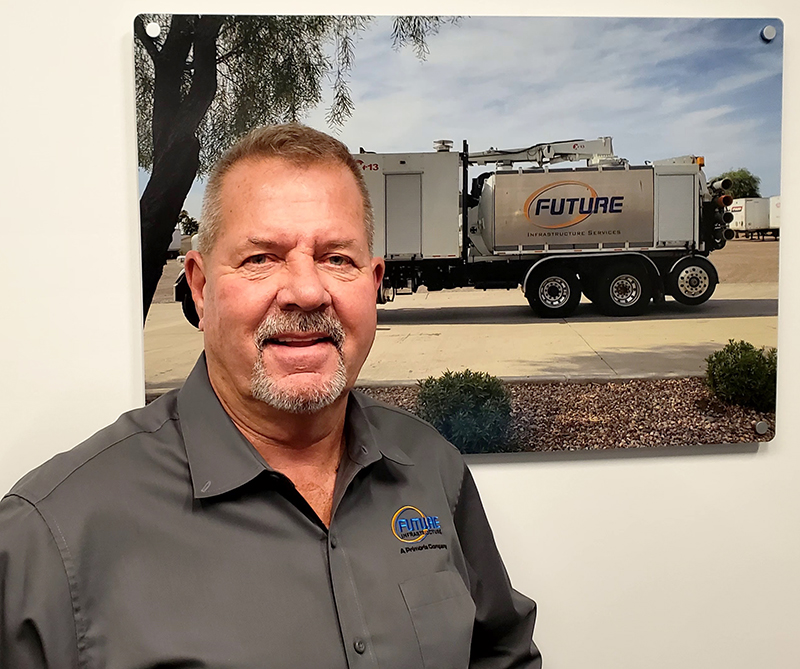
“We also subcontracted a large portion of our directional drilling work,” he said. “That’s why getting these people all to work safely and profitably was always really important to me.”
Riggs has nearly 40 years of experience in all aspects of the telecommunications and utility infrastructure installation, maintenance and repair industry. Prior to the establishment of Future Telecom, from 1988 to 1999, Don served as operations manager for R-COM, a Dallas-based underground installer of telecommunications infrastructure. From 1980 to 1987, he was the founder and owner of All Star General Contractors, a cable television and telecommunications construction company.
In 2023, Riggs became the first president of the Horizontal Directional Drilling Association, serving two, one-year terms and helping guide the organization’s direction and success in representing the needs of the HDD industry. Under Riggs, the HDDA focused on safety and education.
Frank McKenney, Sharewell, InRock
Frank McKenney is recognized for introducing new drilling methods and downhole tooling to assist contractors in pioneering the first successful hard-rock crossings, thus creating a new market niche worldwide for the HDD Industry.
McKenney has over 47 years of downhole drilling tool experience gained from oil and HDD industries. After earning a geology degree from the University of Houston, McKenney began his career in 1978 as a field engineer for Johnston-Schlumberger, running drill stem test tools for reservoir evaluations in the Permian and Anadarko Basins.
In 1981, he received a ground floor opportunity as staff engineer to lead Eastman-Whipstock’s field test team in developing one of the industry’s first mud pulse MWD guidance systems. In 1984, he joined Dyna-Drill Division, of Smith International, as sales engineer to promote utilizing mud motors and diamond bits to drill straight-hole and low-to medium-radius directional wellbore applications to lower drilling cost-per-foot over conventional rotary drilling methods.
By 1986, Smith consolidated its rock-bit business with all their individual downhole tooling divisions and McKenney was responsible for marketing complete downhole drilling system packages including directional and horizontal drilling services.
In 1987, McKenney received a fateful call from Bill Sheridan at SPIE Horizontal, one of only eight directional crossing contractors in the world at that time, who was struggling to drill a hard rock section encountered on a river crossing near Boston.
According to McKenney, “The accepted drilling practice at that time was to use a wash-over BHA consisting of a 2-7/8-inch PH6 drill-string, running a 3 7/8-inch steel blade drag bit on a 2 7/8-inch mud motor. Rig crews would drill down a 31-foot joint of pipe at a time, then wash-over each section with another joint of larger 4 ½-inch IF drill pipe using a 7 7/8-inch by 4-inch hollow core drag bit, repeating the procedure until entire pilot hole completion. Fly-cutters were pulled-back in stages the same as done today to a certain size to accommodate a product line pull-back.
“Obviously, this drilling method and combination of tooling was ingenious for drilling softer formations and protecting expensive non-mag BHA’s and steering probes but not capable of drilling hard rock effectively. It was astonishing to us that the oil-well drilling and HDD industries had both coexisted and worked at times for some of the same major oil & gas operators but apparently were independently unaware of each other’s existence, needs and capabilities. Drilling a rock crossing was considered impractical, if not impossible, from 1971 until 1988 and were avoided.”
When McKenney arrived on location, the contractor had only made about 175 feet of pilot hole in softer overburden but entered granite formations where progress stalled out over three weeks of attempts. McKenney convinced the contractor to try laying down the wash-over string, move the rig over a few feet to start a new pilot hole using their 4 ½-inch drill-string with a 6 ¾-inch motor and an 8 1/2-inch roller cone TCI bit guided by mud-pulse MWD system.
“Once the larger tools arrived out on location, everyone was concerned the heavier BHA would sink downward, be hard to steer and never be able to hold or build enough angle to punch out. However, the drill had progressed well beyond the old pilot hole, out to 375 feet by that same afternoon and continued to punch out the 3,100 foot bore right on target in 10 days.”
The bore was then reamed out to 36-inches in three separate passes with TCI roller cone hole openers.
Word about the Boston rock bore spread fast. In early 1988, Will Knoll at InArc Drilling contracted Smith to supply large tooling and MWD services for a Newark Bay crossing in hard argillite formation. The project was so successful in proving hard-rock crossings could be drilled cost effectively, it prompted McKenney and Will to co-author a technical paper together for presentation at No-Dig London 1988. By 1989, the wash-over system had been obsoleted for the larger drill string method in both soft and hard formation applications.
McKenney mentioned “us oil field guys also learned some amazing things from the HDD guys. We could turn the mud pumps off at night without fear of getting pipe stuck. We could run wireline steering tools reliably by making spliced connection with crimps and heat shrink. And most importantly, we found out Sharewell’s wireline steering tools were better suited functionally and economically overall for drilling both hard and soft formations than a mud pulse MWD.
“Also, the Tru-Tracker System was much more accurate where magnetic interference was present and offered secondary bore location assurances. We began to spec in Sharewell’s Tru-Tracker into all our BHA’s. By the end of 1988, we were additionally doing rock work for Harcro, Land & Marine, BERCO, Drilled Crossings and Michels.”
McKenney eventually committed to HDD, becoming a founding partner of several service companies including Sharewell Drilling Systems in 1992 and InRock in 1993. He has maintained his team relationships with Smith and other key suppliers and fabrication companies over the years devoted to improving products for HDD. In 2016, he rejoined Sharewell HDD as vice president of business development to launch a new line of Smith Gemini products and other hard rock drilling tools to the industry.
He values his friendly working relationships with customers, suppliers and fellow cohorts.
Russell Baker, Berco
Russell Baker was born in 1952, in Orange, Texas. His career in construction started just after high school, when he bought a bulldozer and began clearing properties, constructing roads and logging sets for timber companies in east Texas.
In the mid-1970s Russell partnered with his father and brother to form Baker Marine Corporation. The company’s primary focus was designing and manufacturing worldclass jack-up drilling rigs. Over the years, Baker Marine grew with subsidiaries in various industries that specialized in offshore and onshore construction, pipeline, dredging and facility installation. BERCO, Baker Energy Resources Corporation, became an obvious compliment to Baker Marine’s companies as BERCO designed, built and operated various drilling rigs for horizontal directional drilling.
BERCO executed numerous river crossings across the United States and the world. As a pioneer in the horizontal drilling industry, Russell witnessed amazing accomplishments achieved with technology that today would be considered prehistoric. He witnessed amazing defeats and accomplishments that would later contribute to technological advances in the industry.
One of Russell’s most memorable experiences occurred shortly after the collapse of the twin towers of the World Trade Center on Sept. 11, 2001. Russell was asked to ground zero twice to consult on the possibility of drilling horizontally in an effort to inject fluids to extinguish fires underground. Due to the extreme heat, twisted metal, and debris, he and his team determined it was not possible, and an attempt was never made. Viewing the destruction at ground zero was life changing.
After retiring from BERCO, Russell became a noted breeder for white tail deer, and his genetic line was sought and influenced many breeding programs across the country. During this same time, he formed Baker Hose with his late son, John. Baker Hose specialized in custom hydraulic hose assemblies and on-site service.
Today, Russell spends his time between his home in Broussard, La., and his lake house.
John Teer, Sharewell
John Teer grew up in an oilfield service family in the 1950s and ‘60s where his father was an oilfield directional driller from the World War II years. At 11, his father took him to oil rigs in South Texas where he would go to the rig floor carrying messages back and forth with instructions for the drillers. Back then, the directional man was on location 24 hours while the rig crews worked shifts. By the time Teer was 15, he was giving directions to the drillers about how many joints to drill before taking a guidance “picture” to determine the next drilling plan.

At 15, Teer’s father relocated the family to France, then England to set up his company office as its first international manager. Teer was sent to boarding school, initially in France, then southern England where there had been a major gas discovery in the southern North Sea. He returned to Texas to finish high school and start university but within a couple of years found himself working on an oil rig as a roughneck offshore Great Yarmouth, England, in the gas fields. Given this was the Viet Nam era, Uncle Sam located him with a “Greetings” Letter. He joined the Navy immediately and spent four years as a communications technician using earlier ham radio and electronics skills.
On separation from the Navy in 1972, Teer joined a U.S. oilfield directional drilling company that utilized his knowledge. This period saw major growth of the energy business worldwide, and due to Teer’s earlier oilfield technical knowledge, he quickly found himself as a young manager starting a new branch of the company in Egypt.
After four years in Egypt, he accepted a job in international sales in Aberdeen, Scotland, as he was now with a wife and two daughters. Within two years, he became the managing director of the Aberdeen company and grew it from its original two offices in England and Scotland to branch offices in eight countries around the world. By 1985, having become a casualty of major growth followed by severe disruption in the energy market – Teer was looking for a job.
Thankfully, a friend and colleague asked Teer to start an international division of Sharewell, back in England. This was his introduction into HDD as we know it today. However, drilling vertical or horizontal using many common tools and techniques gave Teer an immediate step up to bring oilfield tech services to the HDD market.
Within the Sharewell context, using wireline steering tools made an immediate impact on HDD and by 1992, Teer had relocated once again to Texas. He joined with two partners to purchase McKenney Forest's shares of Sharewell. After a period of major market growth, Sharewell was sold to a major oil services group in 1998.
Being on the outside now with non-competition agreements in place, Teer started a pipeline survey company, once again back in England. While working in Aberdeen in the 1980s, he was involved with Shell Expro and a UK gyroscopic avionics manufacturer, in building a gyroscopic survey instrument for resurvey of all of Shell's North Sea wells. The downturn in the industry had caused this successful development project to be redundant and put on the shelf.
In 1998, not being able to compete with Sharewell in HDD guidance, another old friend and Teer purchased the gyro development off the shelf. Teer spent six months resurrecting it to a point where he began surveying the location of HDD pipelines after new installations. Most of this work was in the Netherlands where the national gas company was requiring the 'as-built' survey to confirm pipeline plan and section locations.
In 1999, at the end of his non-compete agreement, he was approached by four of hiis previous UK Sharewell employees to join them. They had left Sharewell in 1998 and were consulting the HDD market as guidance engineers, but were finding it difficult. With his gyro partner, he bought shares of Prime Limited, changed the name to Prime Horizontal, and with his partner handling office aspects of the business, Teer went back to the field as an engineer.
Again, looking back at previous oilfield people and techniques, Teer contacted a company in New York that was building a business by using magnetic theory to steer relief wells into oil well fires or blowouts. He made a deal to act as a co-developer of its technology and Prime would market the products they developed. Within 2 years, they brought the wireline steering tool called ParaTrack to the market. At that time, Teer purchased and traded the gyro survey development to his partner for his half of Prime Horizontal.
At that time, there was a significant market effort in the electric line installation market where parallel lines needed to be installed with a great deal of accuracy. When Teer contacted the New York developer, this was the market he was trying to address which is why the suite of tools were named ParaTrack – for parallel electric line installation.
A few years later, in Canada, in a late-night conversation with one of the drilling company owners, Teere determined that there could be a market for a borehole to intersect another bore coming from the opposite side of a river. Within a year Teer had convinced a company in Holland to attempt this as a planned project. It was a successful effort which set him up to begin doing planned intersects around the world.
Since then, Prime has organically continued to grow and continued to attempt to update equipment and techniques.
Mark Van Houwelingen, Vermeer (1943 – 2020)
The late Mark “Charlie” Van Houwelingen devoted more than three decades to Vermeer and helped guide horizontal directional drilling from an emerging idea to an accepted method. Colleagues remember him as a road warrior who connected contractors, dealers and industry partners then brought real job sites back to the factory in the form of problems to solve.
Born in Oskaloosa, Iowa, and raised near Pella, Iowa, Van Houwelingen attended Pella High School. Before joining Vermeer, he worked at Red Rock Dam, Iowa Power & Light and sold cars. At Vermeer, he even pulled duty behind the wheel, driving company semis early in his tenure. Away from work, he was a loyal sprint car fan who loved to laugh, had firm opinions and was the first to lend a hand.
When the initial Vermeer drill went into testing in the early 1990s, Van Houwelingen was among the first sent into the field to prove what HDD could do. He remembered early contractors as “apprehensive, fearful, full of anticipation,” which he saw as a sign of opportunity. Homeowners were resisting torn-up yards, environmental scrutiny was growing and utilities needed a better way. Van Houwelingen took that challenge head-on.
Those first machines were crude – racks pulled by hand, stake-downs driven with a sledgehammer, drill rod made up with pipe wrenches. Van Houwelingen learned alongside crews and carried problems back to Pella, pushing upgrades that made work more productive and efficient. He helped steer the shift from the Vermeer D7 to the Vermeer D24 HDD, pressing for torque and pullback to match bigger reamers and longer bores. He backed practical improvements like automatic breakout, better stake-downs and floating heads to protect threads.
On compact drills, he backed the self-contained design that put the engine and controls directly on the rig. Early prototypes were basic and required the operator to stand, until a simple field moment changed the design – someone sat on a bucket to rest, and the team realized a seated operator station with controls at hand would make the machine far easier to run. That adjustment, combined with the compact frame, set the pattern for self-contained rigs that became standard in the HDD market.
Van Houwelingen was involved in late-1990s and early-2000s patents for steerable fluid hammers, mixed-ground heads and machine protection features. Some stayed experimental while others influenced later designs, but all reflected his focus on solving contractors’ real-world problems.
Van Houwelingen knew technology wouldn’t spread without people who could run it. He helped launch the Vermeer Navigator Certification Program, a weeklong school that gave dealer personnel practical knowledge of fluids, locating, tooling and bore planning. That foundation grew into HDD roadshows hosted by dealerships, one-day events that mixed classroom instruction with live demonstrations so local contractors could see the process end-to-end.
Van Houwelingen helped HDD in three durable ways. He brought contractor needs from the field into design conversations, driving gains in torque, pullback and tooling that matched real work. He built industry-wide education through training programs, roadshows and technical writing. He collaborated across company lines, so crews heard aligned guidance instead of mixed signals. Not every idea became a product, but the cycle he championed – listen, teach, try, refine – helped HDD move from uncertainty to standard practice.
Beyond equipment and training, Van Houwelingen is remembered for the way he built relationships. He connected easily with contractors and dealers, cared deeply about their success and left an impression as much through his character as through his technical contributions. He was a straight talker, a problem solver and a steady influence in the early HDD community.
His legacy lives on in the people he trained, the dealers he equipped and the contractors who learned HDD from a team he was part of. Mark “Charlie” Van Houwelingen, of Knoxville, Iowa, passed away on November 17, 2020, at the age of 77.
Robert Hamil, Laney Directional Drilling (1932 – 2007)
Robert H. Hamil, after many years in the pipeline industry as a master mechanic, became solely involved in directional drilling operations in the late 1970s, when he met and worked with Martin Cherrington.
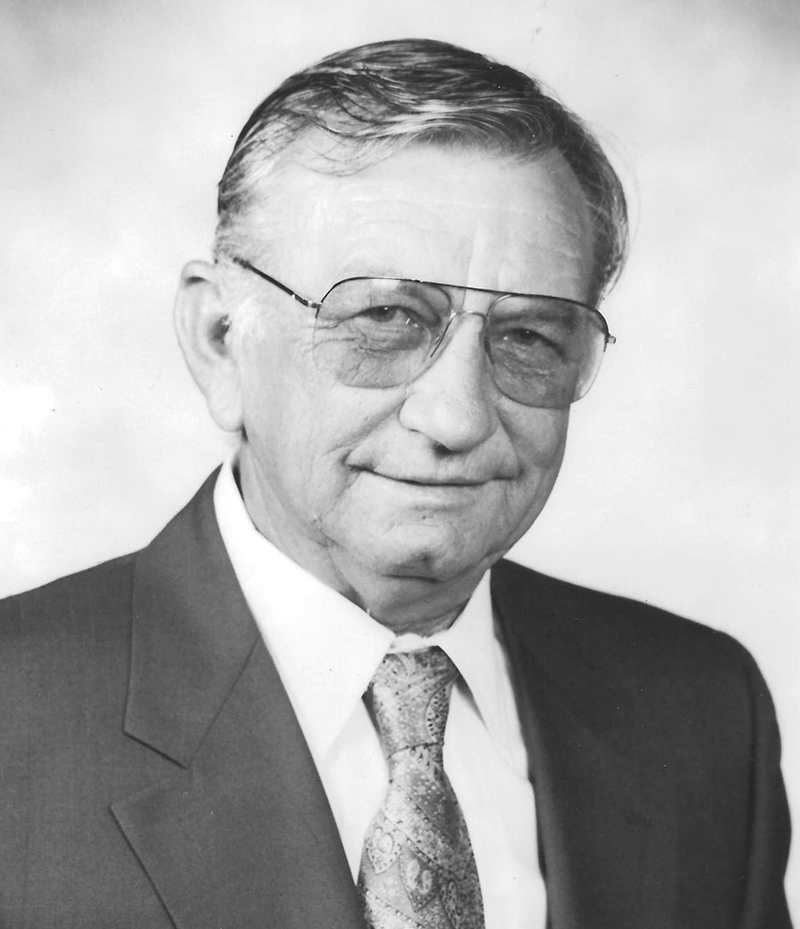
This was the beginning. Hamil continued to build and innovate as the manager of operations for two other international drilling companies, developing, building and operating more directional drill rigs.
In 1989 he founded, along with the Laney brothers, Laney Directional Drilling Co. Hamil’s unique ability to assess a project and overcome unforeseen difficulties from start to finish was well known by satisfied customers and competitors worldwide.
Hamil’s legacy continues after working with his son, Robert D. Hamil, as operations manager of Laney Directional Drilling Co. until retirement and now with his grandson, Robert Neal Hamil, who is still involved in the industry.
Thomas “Tom” Michael Allen, Tom Allen Construction/American Fiber Comm (1940 – 20230
Industry pioneer and Distribution Contractors Association Past President Thomas Michael (Tom) Allen, of Edwardsville, Ill., died Oct. 23, 2023, at the age of 83.
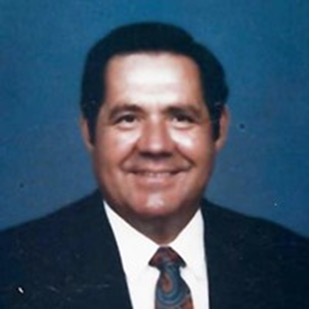
Allen served in the U.S. Marine Corp Reserves from 1957-1965, earning the rank of Seargent. He was a member of St. Boniface Catholic Church, Edwardsville Gun Club, Edwardsville Moose Lodge 1561, Edwardsville Knights of Columbus and the Distribution Contractors Association, serving as president of the DCA in 1994.
Allen started work as a lineman for Illinois Bell Telephone from 1958 to 1976. He then worked for John Burns Construction until 1980, when he started Tom Allen Construction specializing in utility construction. He later founded and operated American Fiber Comm, which he ran until 2019.

Comments