


July 2026 Vol. 81 No. 7
Features
Utility and communications construction enters 2026 with strong momentum
By Daniel Shumate
Managing Director, FMI Capital Advisors Inc.
Utility and communications construction markets head into 2026 with strong momentum, driven by data center growth, rising power demand, grid investment and continued water and wastewater pipeline work. The impact of the data center segment in particular continues to pull dollars and contractors toward these large opportunities with strong margin potential. The strength of this spending has defied expectations and appears likely to continue as AI shapes the world around us.
Despite the strength in segments of the UCC space, underground contractors bidding fixed-price work this quarter are navigating one of the more volatile material cost environments in recent memory. Copper is up roughly 32 percent year over year, steel pipe has climbed about 12.5 percent, and cement has risen nearly 8 percent — and that's before accounting for the latest round of Section 232 tariff adjustments, which pushed duties on steel, aluminum and copper products as high as 50 percent, with derivative products (think fittings, conduit and fabricated components) carrying a 25 percent levy. While most of the materials costs are borne by the customer, it lowers the total number of miles that can be installed as the total price per foot increases.
The timing adds another layer of uncertainty. The temporary 10 percent Section 122 tariffs are set to expire in July, giving way to Section 301 replacement duties that will apply a more complex, country-specific tariff map. Depending on where suppliers source raw material, costs could move in either direction almost overnight. That's a difficult backdrop for locking in a fixed price on a project that won't break ground for months. Owners should be pricing escalation clauses, shortening the validity window on quotes and getting very specific with suppliers about where materials originate before committing to a number that must hold for the life of a contract.
Layer a tightening labor market on top of that cost picture and the risks continue to increase. Industry estimates put the 2026 workforce gap at roughly 349,000 net new workers needed just to keep pace with demand, driven by an aging trade workforce, competition from data center and power infrastructure megaprojects, and changes to immigration enforcement. That translates into upward pressure on wages and schedule risk that's just as hard to pin down in a fixed-price bid as material costs are.
Taken together, these three forces — tariff-driven material volatility, an approaching tariff policy deadline and a shrinking, more expensive labor pool — argue for real caution on fixed-price contracts in the months ahead. Owners who haven't already should be talking to counsel and their bonding/insurance partners about escalation clauses, price validity periods and change-order language that accounts for material and labor cost movement outside their control. A fixed price protects the client from surprises; right now, it's the contractor who's most exposed to them.
UCCI performance & updates
The Utility & Communications Construction Index (UCCI) below presents the stock performance of the sector's publicly traded companies over the past quarter and year to date. In the second quarter of 2026, the UCC Index experienced more volatility relative to the S&P 500 and performed roughly in line with the major index. Year to date, the UCC Index is up 38.6 percent versus the S&P 500, which grew 8.9 percent over the same period. With volatility in the Middle East, shifts in tariff requirements and continued power demand, the volatility of the UCC Index will likely remain high.
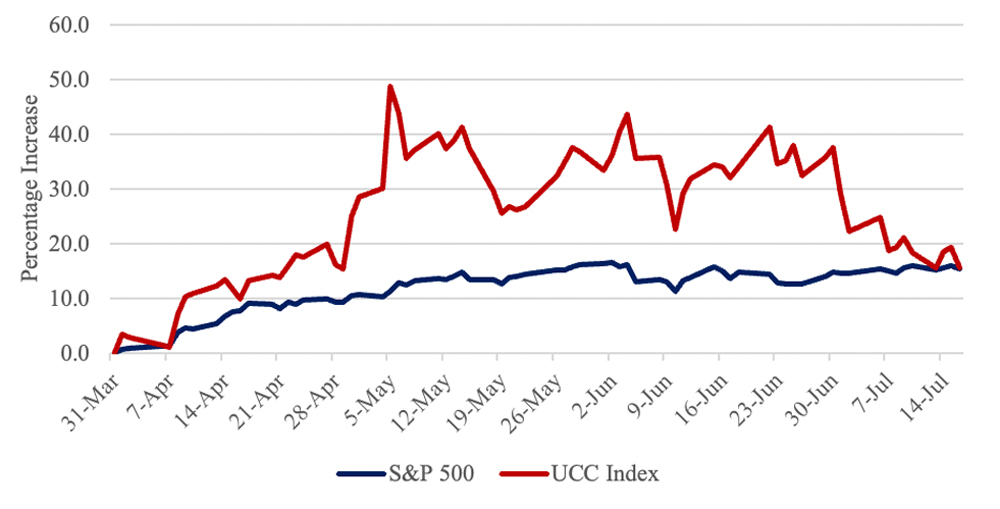
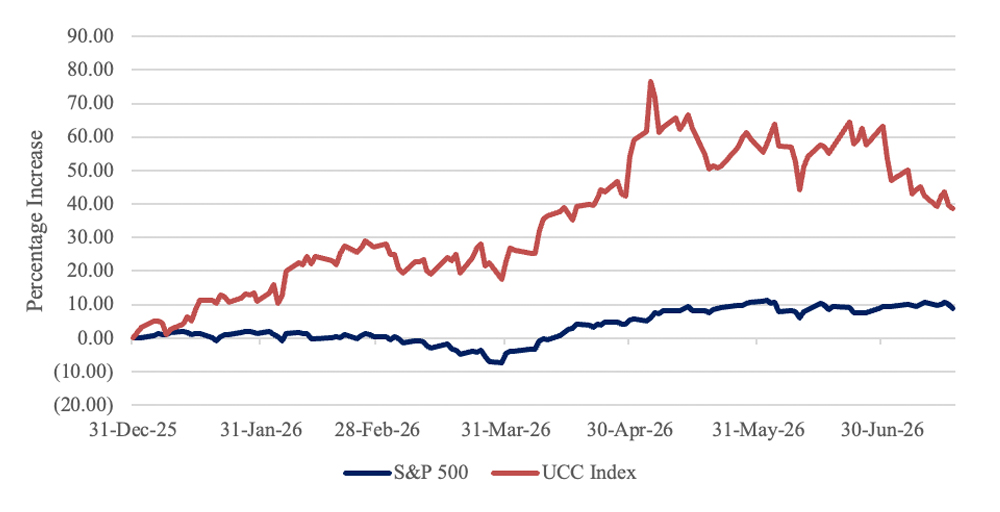
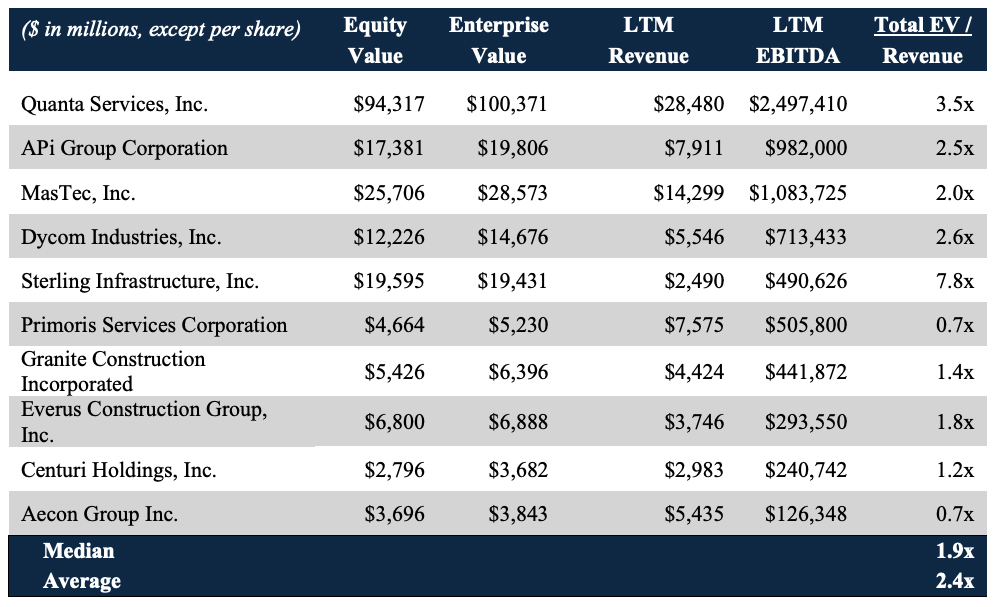
Source: S&P Capital IQ; data as of July 17, 2026. All data is trailing 12 months (TTM).
Mergers & acquisitions
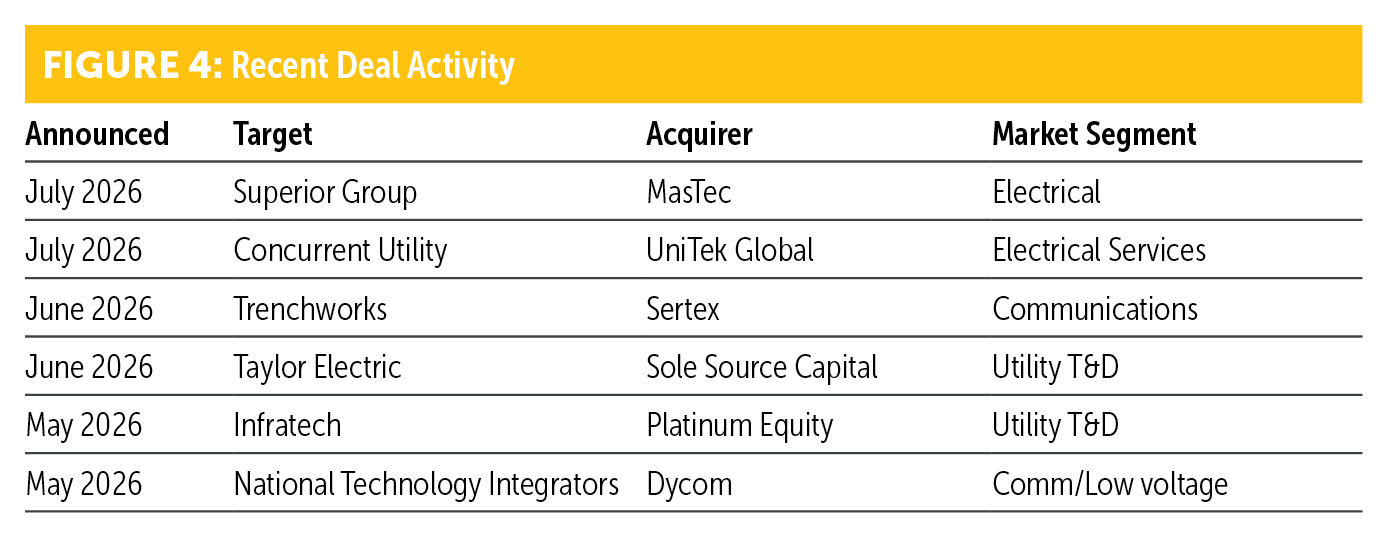
The beginning of July saw a very large acquisition of Superior Group by MasTec to further its capabilities in the data center and commercial electrical markets. This gives MasTec capabilities similar to Quanta to provide turnkey data center construction. In addition, continued strong interest in the power and communications markets has made 2026 a very strong year for mergers and acquisitions in the utility and communications infrastructure segments.

Comments