


June 2026 Vol. 81 No. 6
Tech Tips
Utility-safer trees can help protect underground infrastructure
By Jason Rosell, CPII, Engineering Superintendent, West Bloomfield Township Water Utilities Department
Trees play an important role in our communities, offering shade, beauty and environmental benefits that make daily life more enjoyable. Yet for those of us responsible for underground infrastructure, trees can also be a persistent source of operational challenges. Root intrusion, restricted access for equipment and damage caused by fallen or uprooted trees all contribute to delays, service disruptions and increased maintenance costs. As communities continue to develop, greater coordination is needed among planners, engineers, utility operators and landscape professionals to balance aesthetic goals with the long-term protection of critical infrastructure. One of the most effective strategies is the thoughtful placement and selection of utility-safer trees.
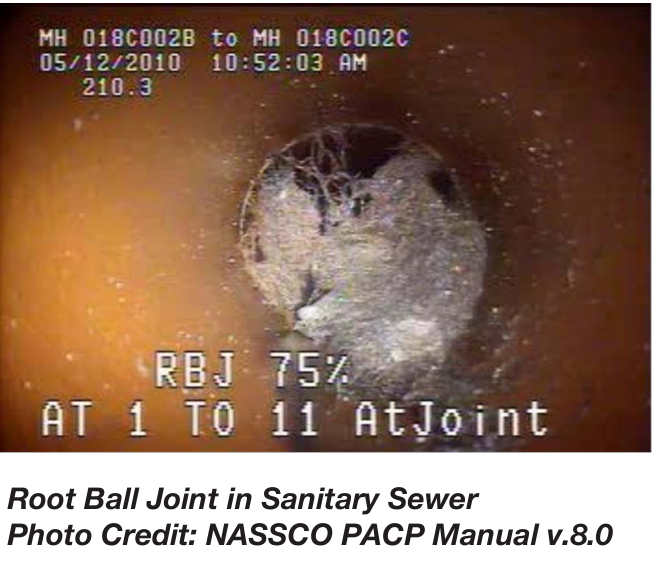
A case study from Australia published in Environmental Challenges (Georgina Miller, 2025) highlights the scale of the issue. Researchers found that 23.8% of storm sewer mains and 26.1% of sanitary sewer mains were affected by tree roots. These intrusions caused structural deficiencies, blockages and, in some cases, complete system failures. The consequences are significant: increased maintenance costs, sewer backups into homes, localized flooding and emergency repairs that strain municipal budgets. Utility operators are often forced to invest heavily in both preventative and reactive maintenance programs simply to keep pace with the damage caused by incompatible vegetation.
Water distribution systems face similar risks. During Hurricane Matthew in 2016, numerous trees were uprooted in Ormond Beach, Florida. Root balls that were torn free from the ground damaged water mains, causing a complete loss of water service throughout the city. A boil water advisory was issued, and FEMA was required to truck in potable water until repairs could be completed, according to the Ormond Beach Observer. This event underscores how tree-related damage can escalate from an inconvenience to a significant public health and safety concern.
To reduce these risks, infrastructure projects and community developments must incorporate strategic tree placement and species selection from the outset. The University of Tennessee's publication Choosing Sewer Safer Trees (Brett Ward, 2023) provides valuable guidance on species that pose lower risks to sanitary sewer systems. Their research includes a detailed table of recommended trees that are less likely to cause root intrusion or structural damage.
One of the most important goals is ensuring that trees are planted outside of utility easements. This spacing must account not only for the trunk but for the full mature canopy and root spread of the species. Planting a tree just outside the easement or right of way is not enough if its branches and roots will eventually extend several feet beyond that boundary. Proper spacing gives utilities a fighting chance against natural vegetation growth while still allowing communities to enjoy the benefits of urban forestry.
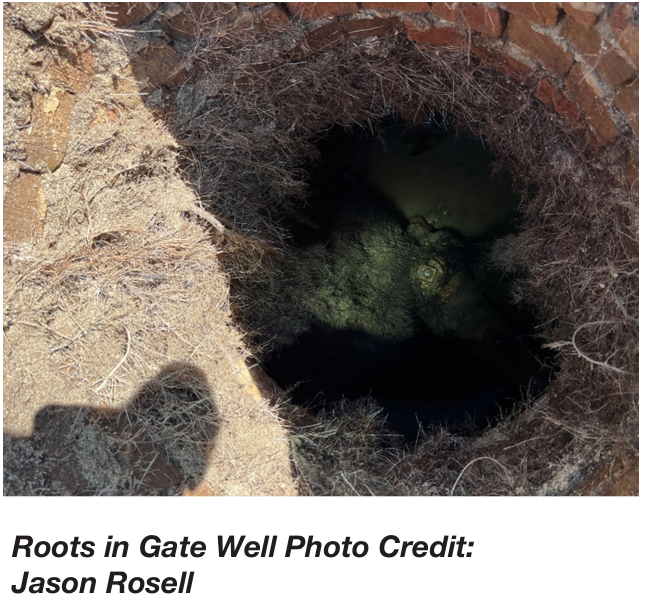
In my own community, I recently encountered a gate well obstructed by a large root ball. The mass of roots would make it extremely difficult to operate the valve during a water main break. Situations like this demonstrate that improper tree placement is more than a nuisance; it can directly impede emergency response and prolong service outages.
Balancing these factors requires collaboration. Engineers, planners, landscape architects, developers and utility operators must work together early in the design process to ensure that the needs of all stakeholders are met. When thoughtful planning is prioritized, communities can reduce long-term maintenance costs, minimize service disruptions and protect residents from avoidable hazards—all while preserving the environmental and aesthetic value that trees provide.
Utility-safer tree selection is not simply a landscaping preference; it is a critical component of proper infrastructure management. By making informed choices today, we can help protect our underground assets for decades to come.
References
- Brett Ward, W.K. (2023, October). Choosing "Sewer Safer" Trees. University of Tennessee Institute of Agriculture.
- Georgina Miller, B.K. (2025). Impacts of tree root intrusion on stormwater and sewer systems: Balancing urban greenery with infrastructure in an Australian case study. Environmental Challenges.
- Grant, W. (2016, Oct. 11). City lost entire water supply during the hurricane. Ormond Beach Observer.

Comments