


May 2026 Vol. 81 No. 5
Features
Solvent welding best practices for reliable underground pipe joints
By Sean Comerford
Underground piping systems are often out of sight, but their performance is critical to the long-term reliability of water, sewer and storm infrastructure. Whether installed beneath a commercial building, a municipal right-of-way or an open field, these systems must withstand environmental exposure, soil movement and decades of service without failure.
For contractors and engineers, solvent welding remains one of the most common and trusted methods for joining PVC, CPVC and ABS piping in underground applications. While the chemistry of solvent cement does not fundamentally change below grade, the installation environment introduces variables that can significantly impact joint quality.
Understanding how to select the right solvent cement – and, more importantly, how to apply it correctly in underground conditions – can make the difference between a durable system and costly rework.
Underground vs. above ground
Regardless of the application, once properly cured, a solvent-welded joint becomes a homogeneous part of the pipe itself.
Because solvent cement chemically fuses the pipe and fitting, the joint ultimately takes on the same physical properties as the surrounding material. When executed correctly, it is often the system’s strongest point, not its weakest.
This means that solvent cement selection for underground applications still follows the same core principles:
- Match the cement to the pipe material (PVC, CPVC, ABS)
- Select the appropriate viscosity based on pipe diameter
- Consider application conditions such as temperature and moisture
Where underground installations differ is not in the chemistry, but in the conditions surrounding the installation.
Key selection factors
The first step in selecting solvent cement remains identifying the pipe material and system requirements. Using the wrong cement can prevent proper softening and fusion, leading to weak joints or premature failure.
Typical underground systems include:
- DWV (drain, waste and vent) lines
- Storm drainage systems
- Water service lines
Each requires a compatible solvent cement designed for the specific material and pressure requirements. Underground piping, especially in commercial and municipal work, often involves larger diameters than aboveground systems. This makes cement viscosity a critical factor. Heavier-bodied cements contain more resin, which helps fill gaps and ensure proper bonding on large-diameter pipe. Using a cement that is too thin can lead to incomplete fusion and potential leaks.
For example, medium-bodied cements are typically suitable for pipe diameters up to six inches. Heavy- or extra-heavy-bodied cements are recommended for larger diameters.
This becomes especially important in infrastructure applications where pipe diameters can exceed 12 inches or more.
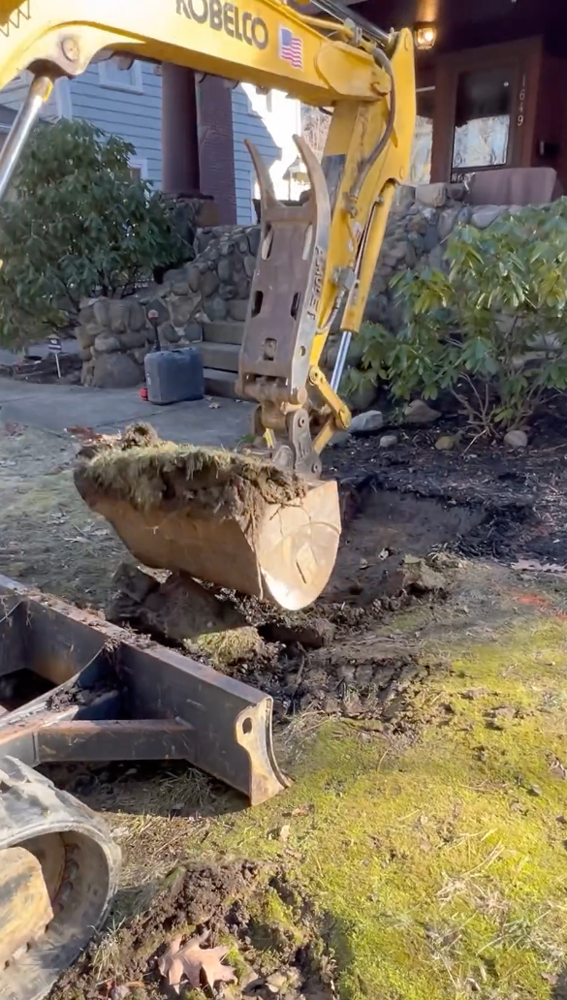
Field experience reinforces this point. In one underground repair project involving a 40-foot replacement of a storm and sanitary line impacted by root intrusion, AC Plumbing transitioned from older clay piping to PVC. Given the pipe size and the need to ensure tight, long-term joints in a buried system, a heavy-bodied solvent cement was selected to better fill potential gaps and accommodate less-than-perfect field conditions. The result was a secure, durable installation designed to withstand both soil conditions and future root exposure.
Specifically, AC Plumbing used:
- Clear Primer - NSF Listed, which removes contaminants, such as surface dirt, grease and grime, and softens the pipe surface to allow for a fast, secure solvent weld.
- Heavy Duty Clear PVC Cement to fill gaps in large-diameter pipe and loose-fitting joints. The cement’s thick formula is still easy to apply with an included in-lid dauber.
This type of application highlights a broader reality in underground work. Pipe conditions are not always ideal and selecting the proper cement body can help compensate for minor irregularities while supporting long-term system performance.
Unlike controlled indoor environments, underground work often takes place in unpredictable conditions. Temperature and moisture can directly affect the performance of solvent cement:
- Cold weather slows the chemical reaction and increases cure time
- Hot or humid conditions accelerate solvent evaporation
- Wet environments may require specialty formulations
Selecting a cement designed for these conditions – such as all-weather or wet-condition formulations – helps maintain consistent joint quality. As many contractors have experienced, ignoring environmental conditions can lead to failures during testing, requiring costly cutouts and rework.
Best practices below grade
While product selection is important, installation practices play an even larger role in underground success. The environment introduces contamination risks and physical constraints that demand extra attention to detail.
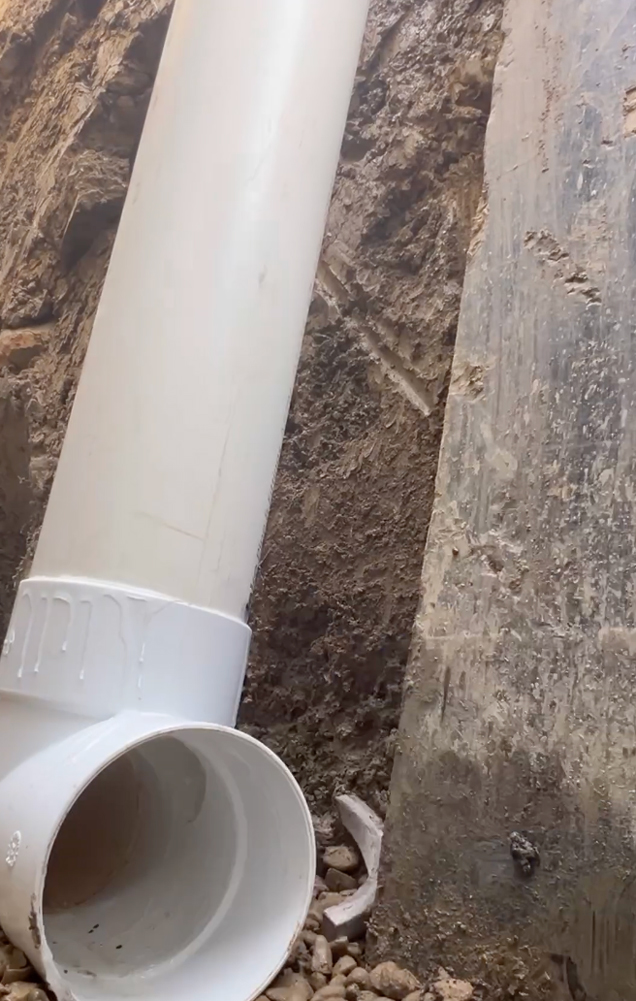
Especially for larger-diameter pipe, proper preparation is non-negotiable. This includes:
- Square cuts for maximum bonding surface
- Deburring to remove loose material that could enter the system
- Chamfering to ease insertion and reduce the risk of pushing cement out of the joint
These steps help ensure full contact between the pipe and the fitting, resulting in a stronger, more reliable weld.
One of the biggest challenges underground is contamination. Dirt, sand and debris can easily enter the joint during preparation and assembly. Proper cleaning is essential to ensure that nothing interferes with the solvent welding process. Even small amounts of debris can compromise the bond and lead to leaks.
Best practices include:
- Elevating pipe ends off the ground during prep
- Cleaning surfaces thoroughly using a cleaner before priming and cementing
- Avoiding contact with soil after cleaning
Application techniques become more critical as pipe size increases.
- Swabs are typically used for smaller diameters
- Rollers are recommended for larger pipe to ensure even coverage
- Applicators should be half the size of the pipe diameter it is being applied to
Proper tool selection helps achieve consistent cement distribution, which is essential for joint integrity.
Underground installations often take place in trenches, open fields or partially constructed structures. These environments introduce variables that must be managed:
- Rain can wash away or dilute cement during application
- Wind and temperature fluctuations affect cure time
- Limited access can make alignment more difficult
In some cases, contractors may need to create temporary enclosures or shelters to maintain workable conditions, particularly in cold weather.
Large-diameter pipe introduces additional complexity, including weight and alignment challenges. Best practices include:
- Using multiple installers for proper alignment
- Employing mechanical joining tools to seat connections fully
- Prefabricating sections outside the trench when possible
Prefabrication can reduce installation time and minimize the number of joints made in confined spaces, improving overall quality.
When installed correctly, solvent-welded joints are highly durable and well-suited for underground applications. Because the joint becomes part of the pipe itself, it performs consistently with the surrounding material. Long-term performance is influenced less by the solvent weld and more by external factors, including, proper bedding and backfill, soil movement and settlement, and root intrusion or external loads.
A well-prepared base – often including compacted stone or engineered fill – helps minimize shifting and reduces stress on the piping system. While environmental conditions can impact installation, they do not inherently degrade a properly formed solvent-welded joint.
Compared to other aspects of underground installation, solvent cement selection is rarely the primary focus of inspection. However, compliance still matters. Key considerations include:
- Use of primer where required (often visible for inspection)
- Matching cement ratings to pipe size and system type
- Adhering to the manufacturer's instructions for cure times
Local codes may also dictate allowable materials, transition methods and installation practices, making it important to verify requirements before starting the job.
Bottom line
Underground solvent welding is less about using a different product and more about adapting to a different environment. The same fundamentals apply:
- Match the cement to the material and pipe size
- Select formulations suited to job-site conditions
- Follow proper preparation and application procedures
What changes underground is the level of discipline required during installation. Dirt, moisture, temperature extremes and limited access all increase the risk of error. By focusing on preparation, environmental awareness and proper technique, contractors can ensure that solvent-welded joints perform reliably—long after they’ve been buried and forgotten.
ABOUT THE AUTHOR: Sean Comerford is manager, inside sales and tech support, at Oatey Co. He is a third-generation tradesman with nearly 20 years of experience, including serving as the lead plumber for commercial/residential new construction, service and fire protection jobs. He holds a State of Ohio Fire Protection License for Sprinkler and Standpipe.
FOR MORE INFORMATION:
Oatey Co., (800) 321-9532, oatey.com

Comments