


Doosan Infracore North America releases its next-generation wheel loaders
Doosan Infracore North America LLC launched its next-generation wheel loaders, the -7 Series, in the U.S. and Canada.
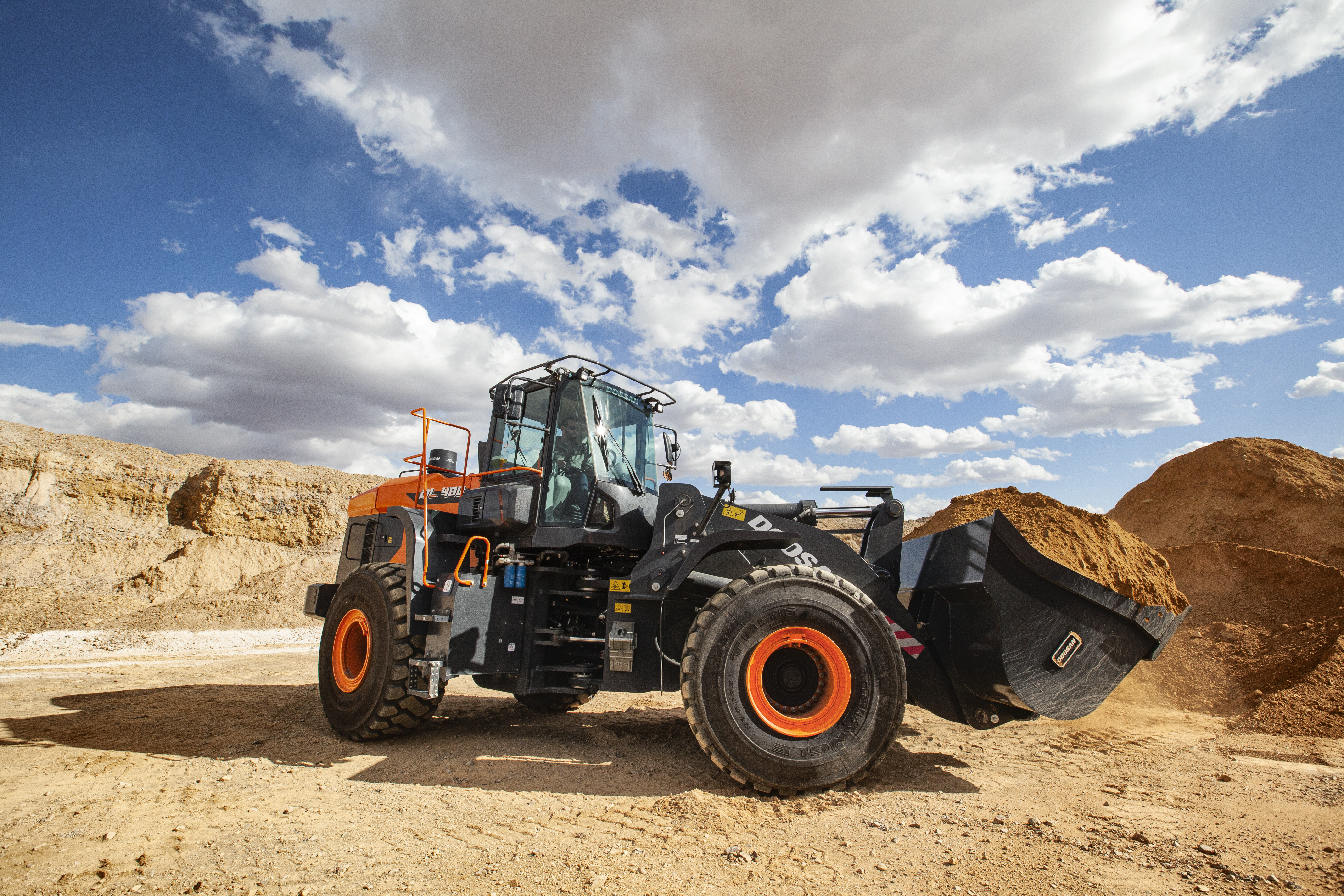
Seven models are available, with standard bucket capacities between 3.7 and 7.6 cubic yards. Five more models, with bucket capacities between 2.6 and 3.3 cubic yards, are planned to launch in early 2022.
Highlights include totally redesigned cabs with first-class comfort features, such as improved layout and visibility; optimized air flow, leg room and storage; and optional electric steering.
Bucket capacities for select models (DL320-7, DL380-7, DL480-7 and DL580-7) are 7-percent higher than prior models, providing faster, easier loading in fewer passes.
Enabling these greater capacities are stronger, larger axles and a strengthened box frame. Large center bearings and self-centering, double-tapered roller bearings distribute vertical and horizontal loads over a larger area.
The new axles offer better braking capacity to extend the lifetime of the brake discs. Other durability improvements include a new radiator, with 40-percent wider fin spacing, so it’s less prone to clogging and easier to clear of dirt, dust and other large debris.
Related News
From Archive

- Oil pipeline struck during fiber optic construction spills into L.A. storm drains
- Utility strike at center of Dallas explosion investigation
- Gas line strike destroys three homes in Ohio neighborhood
- $1 billion Ohio River Tunnel project awarded in Pittsburgh
- Las Vegas advances multibillion-dollar water pipeline expansion
Comments