


Pipeline expansions from Permian, Gulf Coast key to LNG feedgas growth
(UI) — New pipeline capacity out of the Permian Basin and along the Gulf Coast will be critical to meeting surging U.S. LNG feedgas demand over the next decade, according to new analysis from Enverus Intelligence Research (EIR).
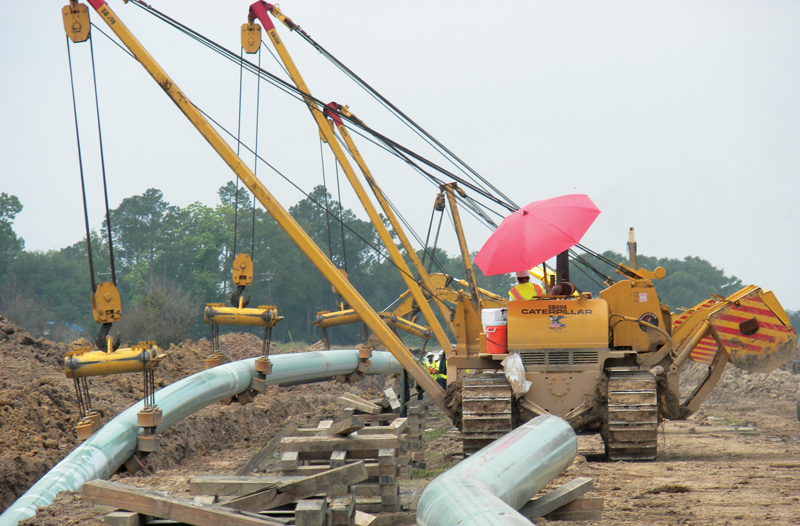
U.S. LNG feedgas demand is projected to reach 33 billion cubic feet per day by 2030, with potential to approach 50 billion cubic feet per day by 2035 if planned LNG expansions move forward. To support that growth, EIR estimates that about 9 billion cubic feet per day of new pipeline capacity will be added from the Permian Basin toward Gulf Coast markets, alongside more than 12 billion cubic feet per day of additional pipeline capacity along the coast dedicated to LNG supply.
“While there is ample pipeline capacity from the Permian Basin and along the Gulf Coast to supply incremental LNG feedgas to 2030, the challenge lies in ensuring long-term natural gas supply for additional LNG expansion,” said Alex Ljubojevic, a director at EIR.
By 2030, the new Permian takeaway capacity is expected to connect West Texas production to major hubs such as Agua Dulce and Katy, helping relieve bottlenecks as LNG demand ramps up. Along the Gulf Coast, pipeline expansions are aimed at improving reliability and flexibility for LNG facilities as export volumes rise.
EIR’s analysis also highlights supply-side challenges. While U.S. LNG demand is expected to grow rapidly, domestic supply growth may struggle to keep pace beyond the early 2030s. The Haynesville Shale, a major source of LNG feedgas, is forecast to peak at about 19 billion cubic feet per day in 2033 before entering a gradual decline.
The Permian Basin is expected to play a larger role over the long term, with dry gas production projected to increase to roughly 40 billion cubic feet per day by 2050. However, EIR cautions that additional infrastructure investment and upstream development will be needed to close a projected 2–8 billion cubic feet per day supply gap by 2035.
The report also addresses persistent market concerns around Permian gas quality and infrastructure readiness, concluding that these challenges can be addressed through targeted investment in pipeline capacity and gas treatment.
Related News
From Archive

- EIA: Texas to lead U.S. pipeline construction activity through 2027
- Oil pipeline struck during fiber optic construction spills into L.A. storm drains
- Utility strike at center of Dallas explosion investigation
- Gas line strike destroys three homes in Ohio neighborhood
- $1 billion Ohio River Tunnel project awarded in Pittsburgh
Comments