


April 2026 Vol. 81 No. 4
Features
Microbial corrosion threatens concrete sewer pipes, new solution targets bacteria
By Richard Northcutt and Chris Sharpe
(UI) — Concrete sewer pipes, which are essential for city infrastructure, are rapidly deteriorating due to a process called microbially induced corrosion of concrete (MICC). This is not simple wear-and-tear; it is an aggressive, chemically driven attack caused by living organisms.
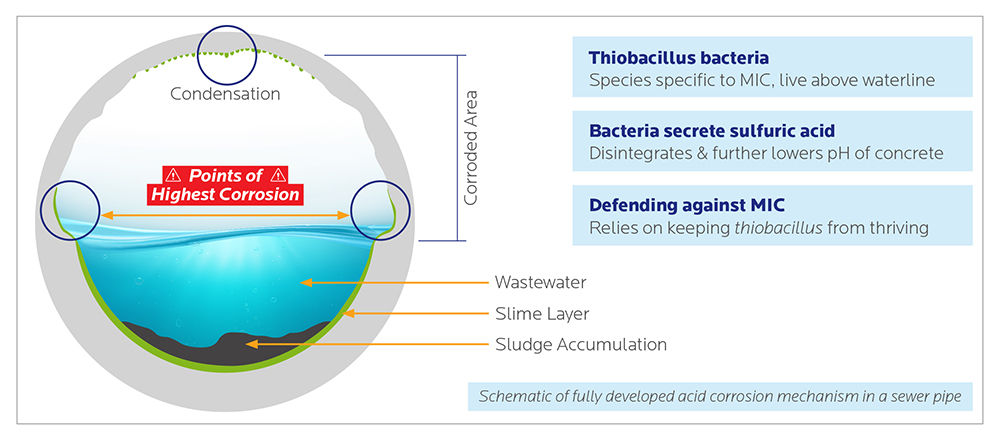
Mechanism of attack
- Sulfuric acid production: Microbes living inside the sewer pipes produce sulfuric acid as a byproduct of their metabolism.
- Concrete decalcification: This strong acid attacks the concrete, dissolving the cement binding agent (decalcification).
- Structural damage: The acid forms weak, expansive materials like gypsum and ettringite. These materials expand, leading to cracks, flaking and eventual structural failure of the pipe.
Microbial degradation process
The process of MICC is gradual and relies on a succession of bacterial species.
- Stage 1: Inherent protection – fresh concrete is highly alkaline, which naturally prevents most microbial growth and provides initial protection.
- Stage 2: pH neutralization and microbial succession – over time, a combination of moisture and sewer gases (abiotic processes) starts to lower and neutralize the concrete surface's pH. This allows a succession of acid-producing bacteria, like the Thiobacillus species, to establish a colony and begin making acid, further lowering the pH.
- Stage 3: Active corrosion – when the pH drops low enough, the most damaging organism, T. thiooxidans, takes over. This microbe thrives in high-acid conditions and drives the most aggressive phase of corrosion.
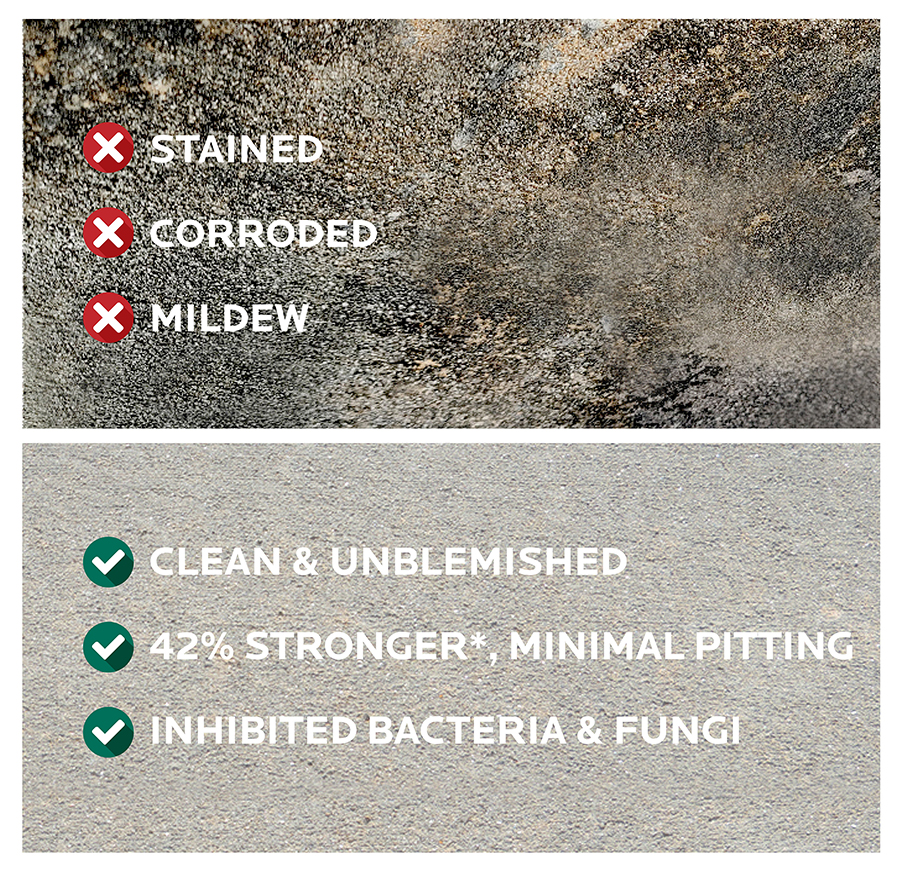
Challenge of traditional solutions
Traditional solutions combat MICC by adding densifiers like silica fume to the concrete mix to make the structure physically stronger, less porous and resist acid. While well-intentioned, these additives can sometimes inadvertently lower the initial high pH of fresh concrete. By doing this, they shorten the protective Stage 1 and accelerate the onset of Stages 2 and 3 – meaning the pipe starts to corrode sooner, despite being physically stronger, shortening the overall lifespan of the pipe.
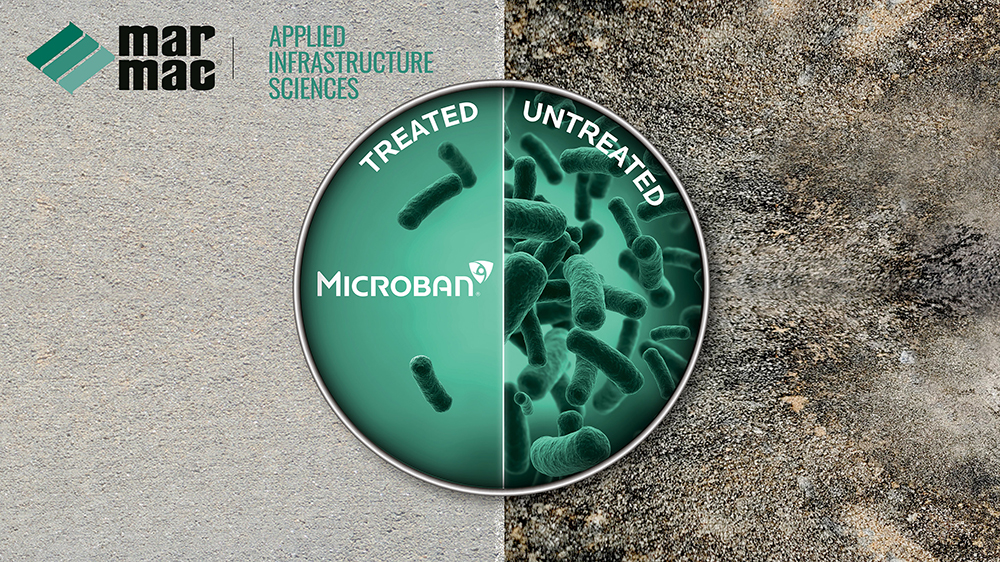
Novel solution: quaternary silanes
The research being explored focuses on antimicrobial choice, specifically using Quaternary Silanes (QASs) with known chemical properties that maintain microbial resistance at low pH.
QASs are well-established antimicrobial compounds. They possess a positive electrical charge and tunable alkane chain lengths, which is key to their function. They are attracted to and compromise the negatively charged cell walls of bacteria, effectively killing or inhibiting the corrosive microbes before they can produce damaging acid. This approach targets the root cause of the corrosion (the bacteria themselves) rather than just trying to physically fortify the concrete.
ABOUT THE AUTHORS:
Richard Northcutt is the director of sales for MarMac Manufacturing Company, richard.northcutt@marmac.com. Chris Sharpe is the senior director, business development for Microban, Chris.Sharpe@microban.com.

Comments