


John Deere Celebrates 50 Years of Backhoe Loaders
John Deere is celebrating 50 years of backhoe loaders, a history of innovation and excellence that first started with the introduction of the JD310 model in 1971. Today, the 310L, the latest generation of the original model, remains a cornerstone within the John Deere backhoe lineup as a result of the continuous improvement to the design and efficient performance.
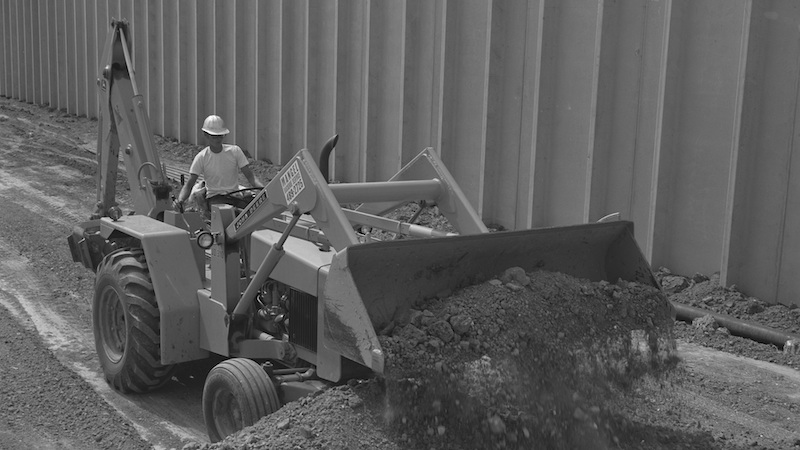
“This anniversary celebrates half a century of reliability and providing customer value stemming from the introduction of our backhoe lineup in 1971,” said Brian Hennings, product manager, John Deere Construction & Forestry. “We are proud of the advancements we’ve made to our backhoe loader line in the last 50 years and are committed to providing our customers with continued innovation.”
Since the 50-horsepower JD310 entered the market, John Deere has continued to evolve its backhoe lineup, building upon the original design through new innovations and technologies. Today, additional models, such as the 310SL and 310L EP continue to advance to meet changing customer needs. The newly redesigned 310SL machine allows operators to be 16% more productive in trenching applications over the previous design. Now with pressure-compensated load-sensing (PCLS) hydraulics, the 310SL provides better multifunctioning, smoother machine control and up to 15% greater craning capacity with Lift Mode, collectively providing a distinctive customer experience and enhanced machine reliability.
Since its introduction in 2012, the 310L EP continues to deliver exceptional value with the redesigned powertrain, which includes a synchromesh manual transmission and a more basic operator station. The 310L EP also features a Yanmar 3.3L engine that complies with Environmental Protection Agency FT4 emissions regulations. With no external aftertreatment components needed, the design minimizes machine complexity and the number of parts that must be maintained by the customer, resulting in lower total cost of ownership and enhanced uptime. This trajectory has continued for 50 years, with John Deere launching many new backhoe loader models over the past five decades with the customers’ needs in mind.
As a commitment to the next generation of backhoe loaders, John Deere has begun joint-testing its first-ever battery electric backhoe loader with National Grid, an electricity, natural gas and clean energy delivery company. Aimed at lowering its carbon footprint and promoting sustainability, the Deere E-Power backhoe loader targets the performance of a 100-horsepower 310L diesel-powered machine, but with zero tailpipe emissions. John Deere is committed to the future of the construction industry, and the 50th anniversary of John Deere backhoe loaders is a testament to the growth and evolution of its machines over time.
Helping commemorate the anniversary, John Deere has created a replica toy model of the original JD310 backhoe loader to help customers celebrate the 50th anniversary at home. Available for purchase in late summer on the John Deere website, each model will feature a unique 50th anniversary icon to showcase the important milestone.
For more information about the John Deere backhoe loaders, please visit the John Deere website or a local dealer.
Related News
From Archive

- Oil pipeline struck during fiber optic construction spills into L.A. storm drains
- Utility strike at center of Dallas explosion investigation
- Gas line strike destroys three homes in Ohio neighborhood
- $1 billion Ohio River Tunnel project awarded in Pittsburgh
- Las Vegas advances multibillion-dollar water pipeline expansion
Comments