


May 2026 Vol. 81 No. 5
Features
How one HDD crew tracked a bore 60 feet above the Yellowstone River
In southern Montana, the Yellowstone River runs fast in the Spring. Fed by mountain snowmelt, runoff turns the channel into a corridor of whitewater, with powerful rapids racing through the valley toward the entrance of America’s first national park.
Somewhere beneath the current, Tru Directional, a small contractor crew of five based in Billings, Mont., would need to guide a drill head beneath the Yellowstone River to install a new fiber infrastructure. The installation would bring broadband internet to a remote retreat, where reliable connectivity had long been limited by the region’s uneven terrain.
The project required two long bores beneath fast-moving water during peak Spring runoff. With turbulent rapids surging through the channel and limited access along the riverbank, the crossing demanded more than just skill. Completing the shot required careful planning, reliable drilling power and a creative locating strategy.
To make it possible, the crew relied on Ditch Witch drilling equipment, dealer support and Subsite’s HDD locating technology.
Different path
The job came through Triangle Communications, based in Havre, Mont., which was upgrading fiber infrastructure throughout the region.
To complete the installation, the crew needed to drill beneath the river twice to connect fiber networks on both sides. On paper, the work appeared manageable. In the field, the river told a different story.
"Spring runoff was the biggest challenge," said Trevor Herman, president of Tru Directional Drilling. "The river was roaring and locating across it was tough."
The crossing required the crew to drill hundreds of feet beneath the river while working from a steep embankment nearly 60 feet above the water, carefully navigating the slope before setting up equipment along the riverbank.
“Tracking the drill head quickly became the most difficult part of the job,” added Herman.
Under normal conditions, locating technicians walk directly above the bore path with an HDD locator, tracking the beacon signal as the drill advances underground. With more than 500 feet of water separating the entry and exit points, traditional walkover locating was impossible.
With the drill head advancing beneath the river, the crew needed a clear locator signal above water. Attempting to track the bore from a boat was quickly ruled out. The current was simply too strong to safely maintain position long enough to gather reliable locating data. The solution was as unconventional as the crossing itself.
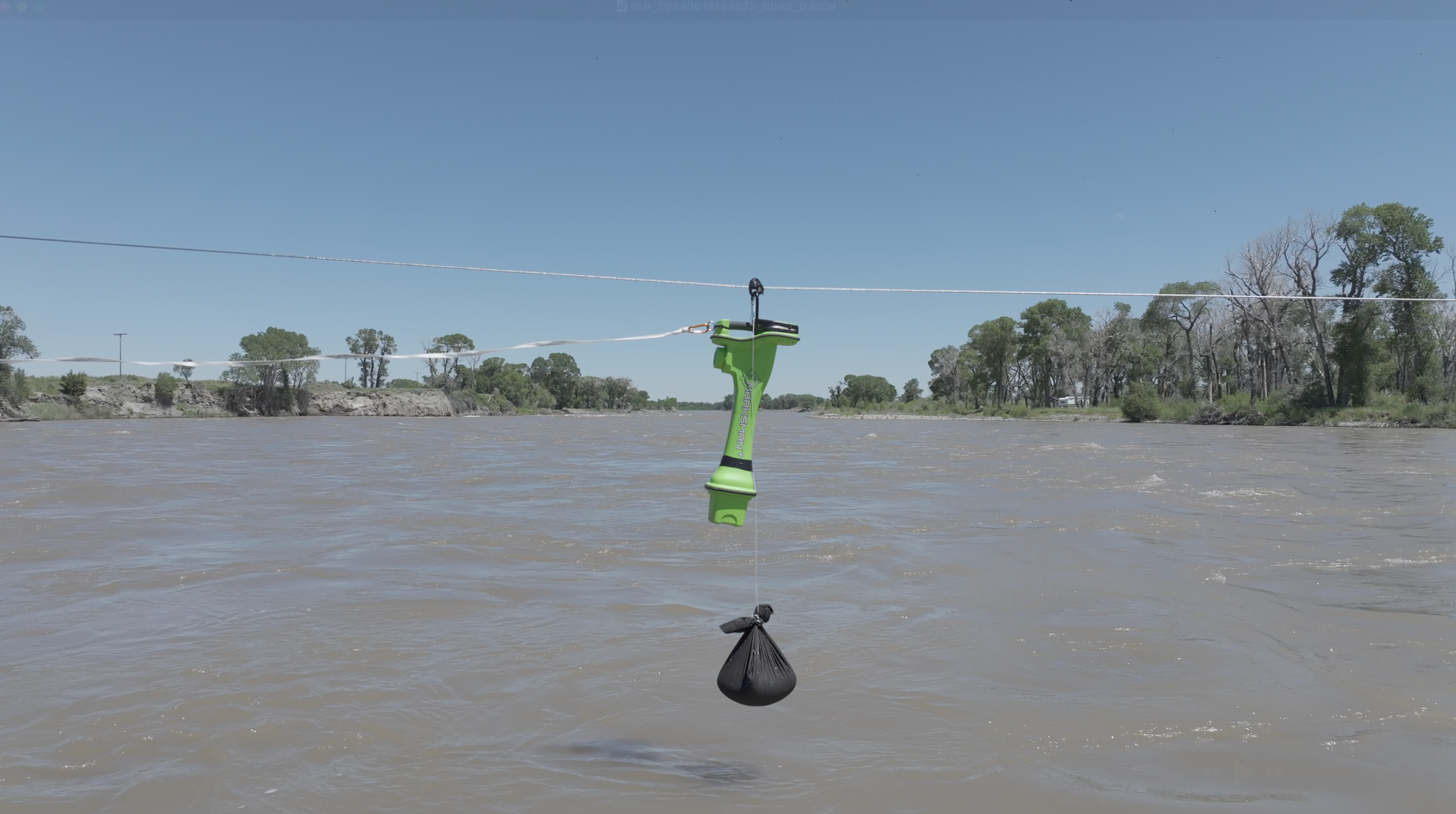
Using a pulley system anchored to the bridge structure, the crew suspended Subsite’s Marksman+ HDD locator 60-feet above the rushing rapids below, allowing the locator to maintain line-of-sight to the drill head moving beneath the riverbed. From the riverbanks, operators moved the locator back and forth across the span, tracking the drill head as it advanced underground.
However, setting the cable across the river proved challenging in the wind and spray of Spring runoff, and it took several attempts before the crew was able to pull the cable tight. Once in place, the Marksman+ provided the locating data needed to guide the bore, allowing operators to monitor pitch, signal strength and drill head movement while maintaining a safe distance from the water below.
"Crossing more than 600 feet under a river requires a high level of confidence in both the equipment and the crew," said Brett Romer, Subsite regional sales manager. "Having the right locating technology in place makes it possible to maintain control and visibility throughout the shot."
Planning meets performance
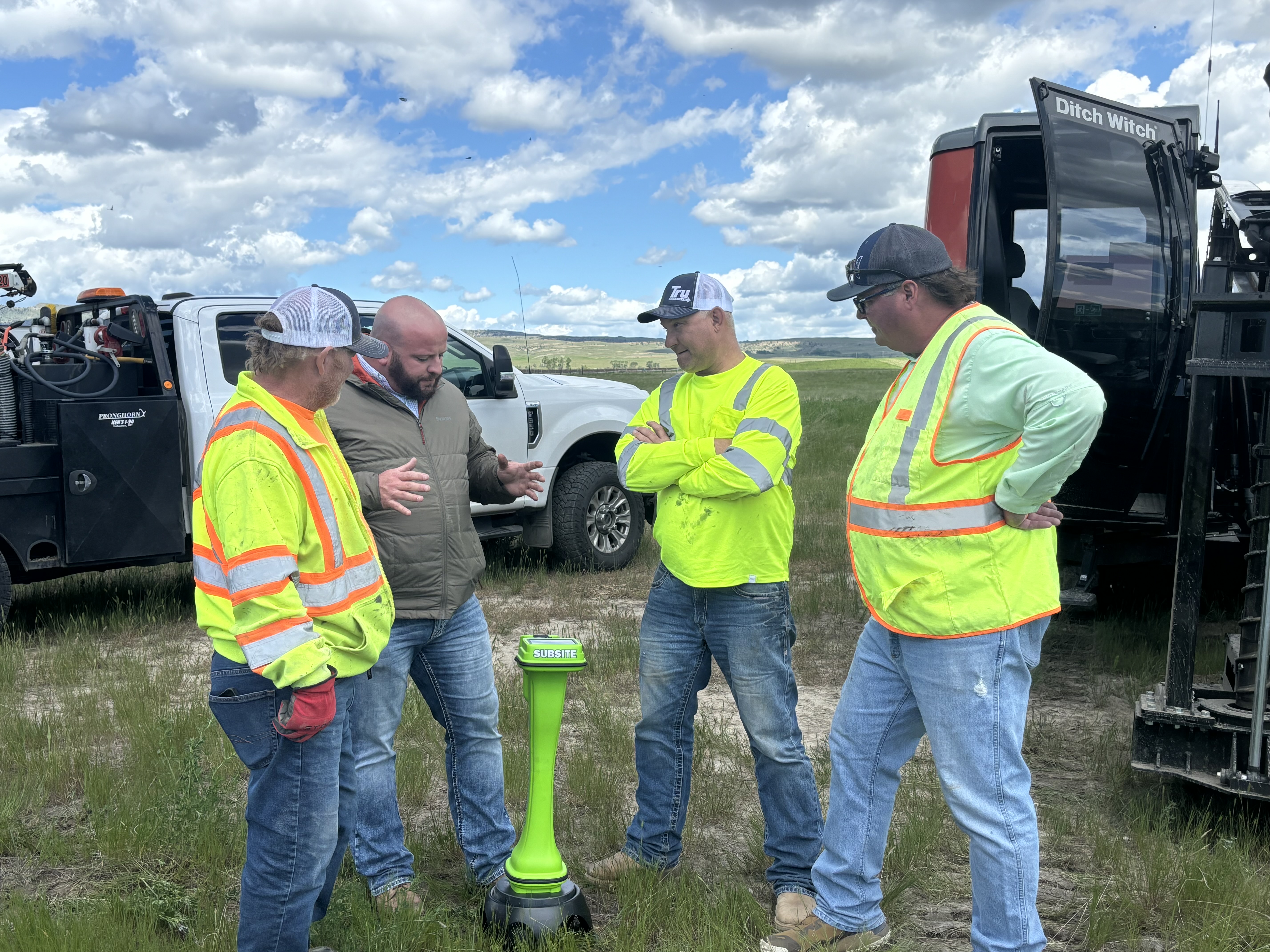
On a river crossing like this, planning is not just a step in the process. It is what makes the shot possible. Working along the Yellowstone River during peak Spring runoff meant the crew was operating in a sensitive environment, where mistakes could carry real consequences. High water, unstable banks and rapidly changing conditions left little margin for error. Every part of the job had to be carefully planned before drilling began.
"Preparation is everything on a crossing like this," Herman said. "You want to know exactly where you're starting and where you're exiting before the first rod goes in. Once you're under the river, there’s not much room to adjust."
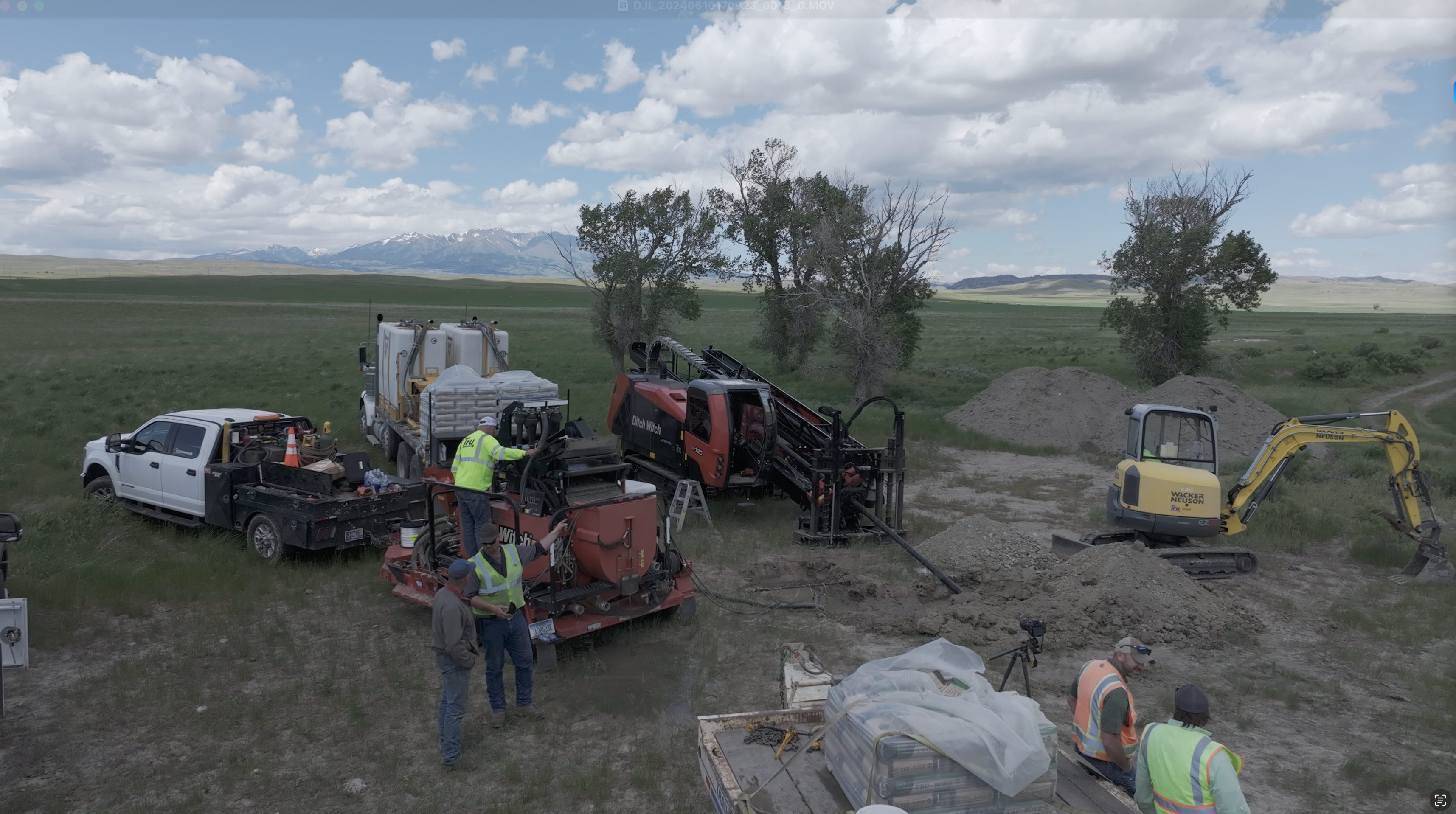
Ground verification was one of the first priorities. The crew used a Ditch Witch HX75 vacuum excavator to pothole and expose existing utilities before drilling operations began, helping confirm conditions and eliminate uncertainty before the bore was underway.
Congruently, support from the local dealership (Ditch Witch West) also played an important role throughout the project. On remote projects like the Yellowstone crossing, access to experienced technicians, parts availability and responsive service help keep equipment running and schedules on track.
"When you're running jobs in places like this, you need to have a partnership that understands the equipment and what contractors deal with on-the-job site,” Herman said.
Crossings like the Yellowstone River reinforce how preparation and technology work together. When the setup is right from the beginning, the rest of the job tends to run far more smoothly. On long shots beneath a river, where opportunities to adjust the bore path are limited, having the right equipment in place and the job properly prepared makes a significant difference.
The project marked the inaugural job for Tru Directional’s newest drill, Ditch Witch’s all-terrain directional drill, the AT120.
Herman had purchased the AT120 specifically with challenging crossings like this in mind. The machine’s All Terrain drilling capability allows operators to maintain torque and steering control in hard rock formations, while maintaining a consistent bore path even in difficult ground conditions.
The first bore extended 900 feet across the riverbed and served as an important first test for the new drill. The Ditch Witch West dealership was on site during the early stages of the project to assist with setup and help the crew become familiar with the machine.
The first crossing took about a week, as the team worked through the process and refined the approach. Once everything was finalized, the second crossing progressed much faster. The crew completed the second bore in roughly three-and-a-half days.
Altogether, both crossings were finished in less than two weeks.
"When you're drilling hundreds of feet under a river, you have to trust your equipment," Herman said. "You’re not seeing what’s happening underground, so everything comes down to the machine and the data you’re getting back.”
From the drill seat, the AT120 provides operators with real-time performance data including thrust, inner rod rotation and drilling speed. Having that information in one place allowed the crew to closely monitor drilling conditions, while maintaining steady progress beneath the river.
Result beneath the rapids
Tru Directional has built a reputation for tackling demanding HDD work throughout the Rocky Mountain region and never shying away from the challenge. The crew regularly travels across multiple states to complete installations in the backcountry, where surface access can be limited and traditional methods impractical.
"You learn pretty quickly that every bore is different," Herman said. "You can plan everything perfectly, but once you start drilling the ground always has something new to say."
For Herman, reliability is essential when working with a tight team in remote locations.
"When you're taking on bigger jobs with a small team, downtime is not an option," Herman said. "You need equipment you can trust to keep working when the conditions get tough."
Completing two long crossings beneath the Yellowstone River marked a major accomplishment for Herman and his crew. The project tested every part of the operation. High water, intense terrain and limited locating options required careful planning, reliable equipment and a willingness to adapt when conditions changed.
For Tru Directional Drilling, it was exactly the kind of challenge the crew has built its reputation on tackling.
"When you're standing on the bank looking at a river like that, you know it's going to be a challenge," Herman said. "There are a lot of things that have to go right to make a crossing like that work. But when the bore comes together and everything aligns, that’s one of the best feelings you can have on a job."
With the drilling success and precision guidance, the crew successfully guided two bores beneath the river during some of the most difficult conditions of the year. Above the surface, the Yellowstone continues to rush through the valley. Beneath it, the crew’s work now runs quietly through the riverbed.
For the crew that made the shot, the Yellowstone River will always be more than a landmark. It is the crossing that proves what preparation, technology and experience can accomplish beneath even the most powerful waters.
As fiber expansion continues across rural regions of the United States, contractors are increasingly asked to install infrastructure across challenging terrain such as rivers, canyons and mountainous ground. Projects like the Yellowstone crossing highlight how modern drilling equipment and locating technology are helping crews complete installations that would have been far more difficult just a decade ago.
FOR MORE INFORMATION
Tru Directional, (406) 294-2342
Ditch Witch West, (406) 252-7667, ditchwitchwest.com
Ditch Witch, ditchwitch.com/
Subsite, (800) 846-2713, subsite.com

Comments