


Mesa, Ariz., commences $180 million pipeline project to bolster water supply amid drought
(UI) — Numerous Valley localities have declared water shortages as a result of the current, record drought. The city of Mesa is now in stage one of its strategy to handle its water crisis. Mesa is investing millions of dollars to improve its water infrastructure while also cutting water use citywide, Phoenix’s 12 News reported.
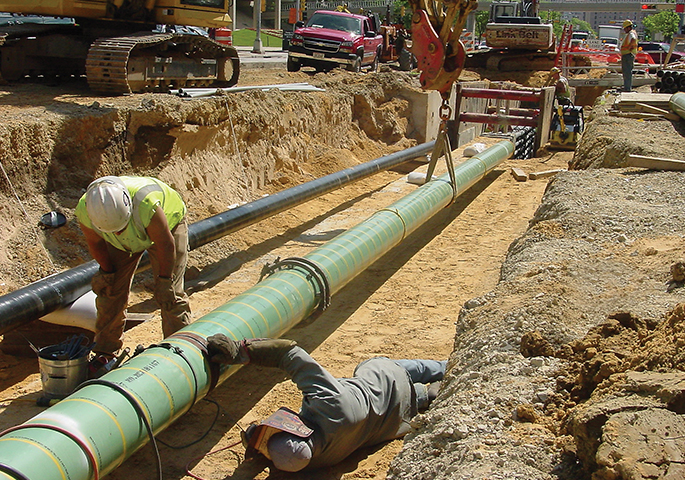
On Monday, work on a 10.5-mile pipeline began. The Central Mesa Reuse Pipeline, which starts at Greenfield and Southern, is supposed to be built out.
The project will cost $180 million in total. The estimated completion date for construction is 2025. Construction will begin at Southern and Greenfield and then progress to Mesa's Broadway in the north.
The farthest point, according to Mesa, is along Val Vista, close to State Route 202 Red Mountain. The pipeline will run from Gilbert, past Greenfield, beneath Greenfield, and on to Recker in Houston.
The goal of the project is to construct a pipe that will join a recycling water delivery system that currently serves the Gila River Indian Community. All of this is a result of a 15-year-old exchange arrangement between Mesa and Gila River.
With the use of the pipe, Mesa will be able to supply Gila River with recycled water, which they use for farming on tribal territory. Mesa receives service water rights for the Colorado River in return, expanding its water supply.
Then, one of Mesa's two water treatment facilities will turn it into drinking water. Customers in the residential, commercial, and industrial sectors will receive that.
The goal of the project is to construct a pipe that will join a recycling water delivery system that currently serves the Gila River Indian Community. All of this is a result of a 15-year-old exchange arrangement between Mesa and Gila River.
With the use of the pipe, Mesa will be able to supply Gila River with recycled water, which they use for farming on tribal territory. Mesa receives service water rights for the Colorado River in return, expanding its water supply.
Then, one of Mesa's two water treatment facilities will turn it into drinking water. Customers in the residential, commercial, and industrial sectors will receive that.
By making the change, the city's water portfolio is expanded, which is essential for keeping up with expansion. Chris Hassert, Mesa's Director of Water Resources, said that water would be significantly more expensive without this strategy.
“It’s taking recycled water that’s being created at one of our plants and we’re exchanging that water for this valuable service water resource," Hassert told Phoenix’s 12 News. "If we weren’t able to do this exchange, we’d have to look elsewhere for service water supplies or find some other way, a much more expensive way by the way, to augment our water portfolio. So, this is really a vital and advantageous project for the city of Mesa.”
Mesa announced a water crisis in May 2022 and began reducing water use at city buildings. Due to the continuous drought that is affecting Arizona's water supplies, the city started stage one of its strategy to manage its water crisis.
There are no required water restrictions for residents in the first phase of the plan. Instead, Mesa is lowering water use by 5% at public buildings and in landscaping areas.
Mesa stated that no roads will be closed during the repair. However, there will be lane limits and barricades for traffic management adjustments that vehicles may notice. These will be moving around continually as the pipeline is being built.
Hassert said that by including the third and last water reclamation facility for the city, this project expands upon an existing infrastructure.
Related News
From Archive

- EIA: Texas to lead U.S. pipeline construction activity through 2027
- Oil pipeline struck during fiber optic construction spills into L.A. storm drains
- Utility strike at center of Dallas explosion investigation
- Gas line strike destroys three homes in Ohio neighborhood
- $1 billion Ohio River Tunnel project awarded in Pittsburgh
Comments